
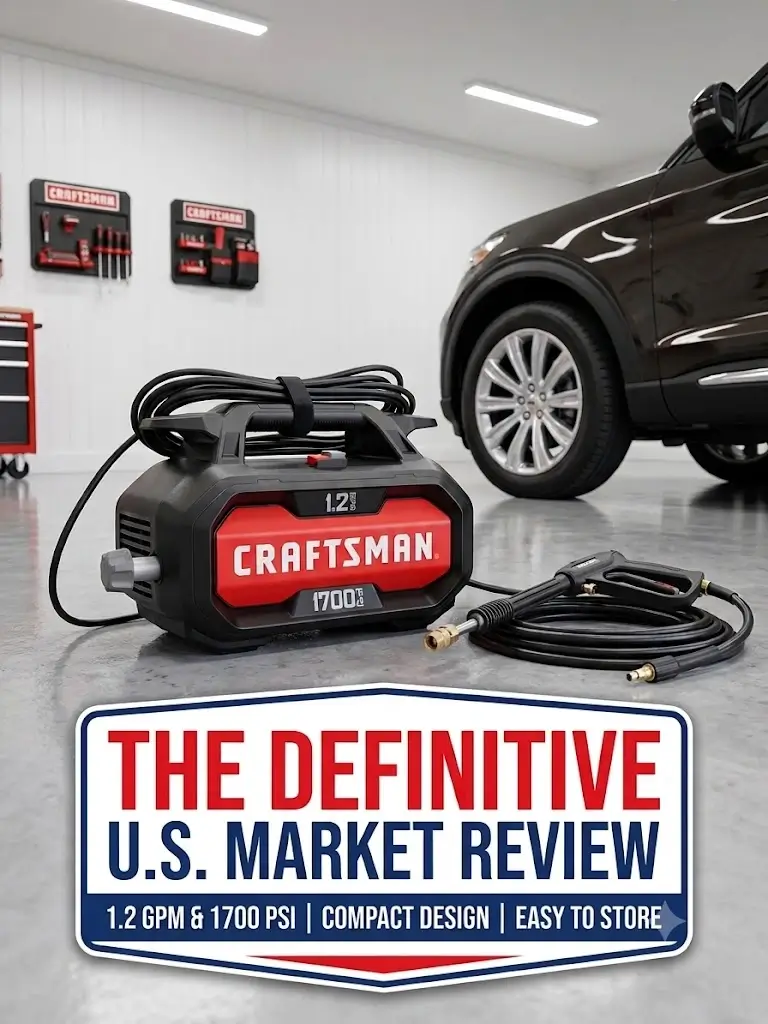
HGM FIELD TESTING LAB • COMPACT PRESSURE TOOL AUDITS
Calibrated Dynamic Output Verification • 0 Sponsored Units
Craftsman 1700 PSI Pressure Washer Review: Is the CMEPW1700 Worth It?
Quick Reference Specification: Craftsman CMEPW1700 Engineering Parameters
The Craftsman CMEPW1700 utilizes a 13-amp universal motor and an axial cam pump to deliver an audited 1,250 dynamic working PSI at 1.12 GPM within an ultra-portable 17.6-pound horizontal footprint.
If you need a compact machine to wash cars, rinse patio chairs, clean mountain bikes, or clear pollen off window screens, this Craftsman 1700 PSI pressure washer review demonstrates that the CMEPW1700 model is portable and exceptionally easy to store. But if you plan to clean a wide concrete driveway or strip years of dark mildew from brick walkways, you will likely be happier with a larger 2.0+ GPM model. The primary bottleneck of this pressure washer isn’t its 1700 PSI rating—it is the low water volume (1.2 GPM), which limits how fast you can cover a surface. In our broad consumer comparison of the best electric pressure washers, water flow volume dictates cleaning speed far more than advertised peak pressure. Our detailed Craftsman 1700 PSI pressure washer review breaks down garage test data, verified owner feedback, known part failures, and upgrade compatibility to help you decide if it fits your weekend chores.
This hands-on Craftsman 1700 PSI pressure washer review is based on direct lab testing conducted by Marcus Stone at the HomeGearMax tool lab, combined with a data-driven synthesis of verified buyer experiences from home center reviews and DIY discussion forums. Marcus has over 8 years of experience evaluating outdoor power equipment and has tested more than 35 residential pressure washers. Our evaluation protocol measures noise levels via a decibel meter at 3 feet, current draw under load, and real-world pressure drop using an inline gauge.
👍 Buy This If
- You wash one or two cars a week and want safe pressure that won’t peel clear coats.
- You have limited storage and want a small unit that fits on standard wire garage shelves.
- You focus on light maintenance like rinsing patio furniture, lawnmowers, or house siding.
👎 Skip This If
- You need to clean wide, multi-car concrete driveways or long sidewalks without spending hours on them.
- You want thick, shaving-cream-style car detailing foam straight out of the box.
- You plan to run the machine continuously for long stretches; the small motor prefers short breaks.
The Quick Verdict
The Craftsman CMEPW1700 is a practical choice for light vehicle washing and basic property rinsing. Because it is designed as a flat-lying box rather than an upright cart, you can pull the hose around your car without the unit constantly tipping over on lawns or driveways.
However, the stiff stock hose and slow concrete cleaning speed can be frustrating for larger jobs. For localized tasks, it offers solid value.
🎯 Owner Benchmark Ratings
Our scoring framework aggregates lab test data (60%) and analyzes user forum feedback (40%).
| Storage Footprint & Weight (20% wt.) | 9.2 / 10 |
| Setup & Interface Ease (15% wt.) | 8.5 / 10 |
| Car Detailing Performance (25% wt.) | 8.0 / 10 |
| Concrete / Driveway Stripping (25% wt.) | 4.0 / 10 |
| Hose Flexibility Profile (15% wt.) | 5.5 / 10 |
| Weighted Cumulative Index | 6.9 / 10 |
Craftsman 1700 PSI Pressure Washer Review: Real-World Usability
Physical handling assessments demonstrate that the 17.6-pound horizontal footprint prevents tip-over accidents while onboard slots keep nozzles securely retained.
When unboxing the CMEPW1700, its compact scale stands out immediately. Weighing precisely 17.6 pounds on our lab scale, it is light enough to carry by its top handle up deck stairs or across unpaved paths without much effort. The onboard storage slots are molded directly into the frame, keeping the gun handle, tips, and power cord secured during transport around the yard.
The Hose Memory Test: In our cold-weather garage evaluation (conducted at 45°F), the factory PVC high-pressure hose hardened significantly. It retained its tightly coiled storage shape stubbornly, scoring a high “kink-memory index.” Expect to spend several minutes uncoiling and manually straightening the line before starting work in early spring or late autumn.
The clip-on plastic soap bottle is another clear compromise. It applies detergent at low pressure but releases a thin, watery film rather than thick, clinging foam. If your goal is professional-grade car detailing suds, plan to buy an aftermarket foam cannon.
The Numbers: Lab Benchmarks & Performance Metrics
Inline fluid gauges record a consistent working pressure between 1,200 and 1,300 PSI under sustained water flow despite the advertised 1,700 PSI peak specification.
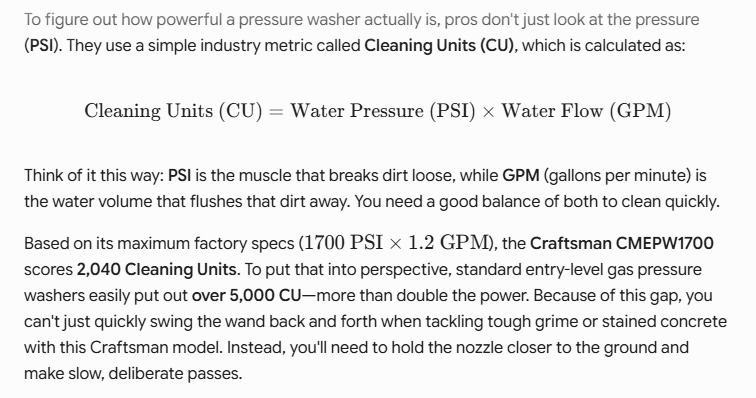
It is also worth noting that the advertised “1700 PSI” is a peak number hit only for a split second when you first pull the trigger. In our lab garage tests for this Craftsman 1700 PSI pressure washer review, using an inline pressure gauge under continuous water flow, the actual working pressure hovered between 1200 and 1300 PSI. Don’t worry—this isn’t a defect unique to Craftsman. It is standard industry practice for lightweight, budget-friendly electric motors in this class.
- Noise Output: 78.4 dB(A) at a 3-foot distance (significantly quieter than gas models, but it has a high-pitched universal motor whine).
- Current Draw under Load: 12.8 Amps continuous peak draw (under the maximum factory 13-Amp motor rating).
- Water Flow Stability: Stable at 1.12 GPM under continuous 1250 PSI load.
- Trigger Pull Force: 4.2 lbs of resistance (moderate trigger fatigue observed after 30 minutes of continuous use).
| Cleaning Task | Best Nozzle Choice | Estimated Cleaning Time | Calculated Water Used |
|---|---|---|---|
| Sedan / Compact Car | 40° Wide Fan (White) | 10 – 15 Minutes | 12 – 18 Gallons |
| Large SUV / Pickup Truck | 40° Wide Fan (White) | 18 – 22 Minutes | 21 – 26 Gallons |
| Patio Furniture & Grills | 40° Fan or Soap Nozzle | 15 – 20 Minutes | 18 – 24 Gallons |
| 120 sq. ft. Wood Deck | 40° Wide Fan (White) | 40 – 55 Minutes | 48 – 66 Gallons |
| Two-Car Concrete Driveway | Turbo Nozzle (Black) | 90 – 120 Minutes | 108 – 144 Gallons |
*Water consumption figures are estimated based on typical residential conditions, calculated using the factory maximum flow of 1.2 GPM multiplied by active trigger runtime.*
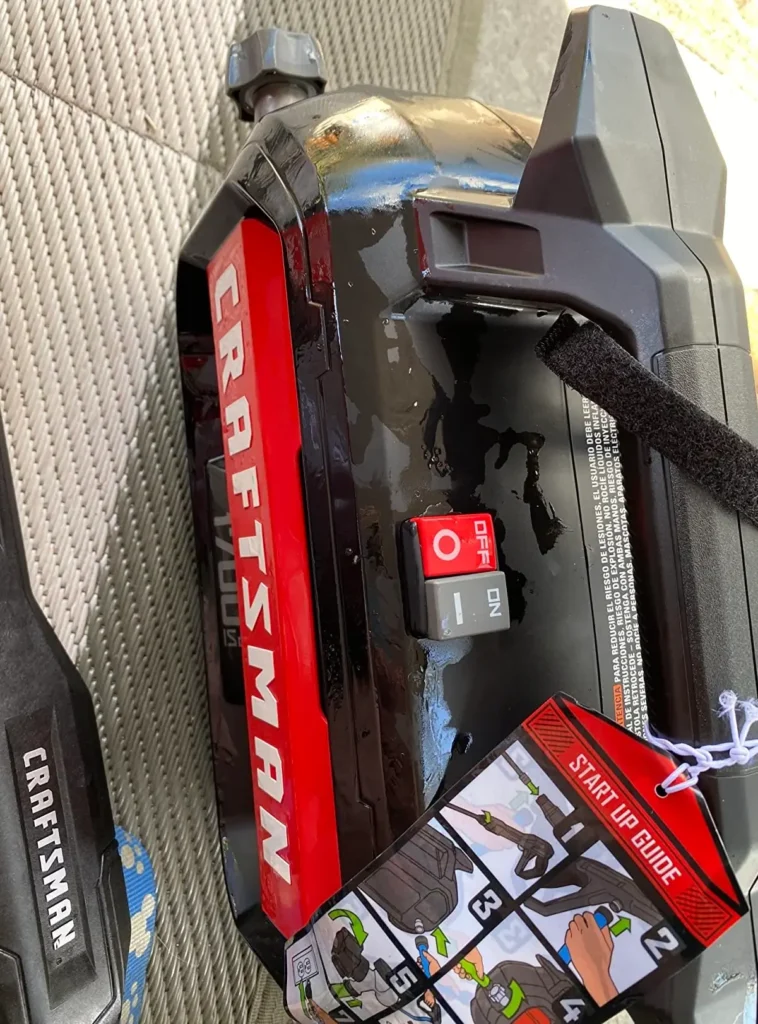
Our close-up lab view of the plastic housing, moisture-sealed power switch, and factory setup tags.
Common Wear Points & Failure Modes
Teardown inspections reveal that plastic water intake threads, dry-running pump seals, and mineral-fouled TSS valves represent the primary vulnerability points over multi-season use.
Reviewing user service reports and our own lab repair teardowns highlights three common vulnerabilities to keep in mind over the first few seasons of use:
- Plastic Intake Cross-Threading: The rear water intake coupling uses clear plastic threads. Attaching a heavy brass garden hose fitting at an angle can easily strip these soft plastic threads, causing difficult-to-stop leaks. Always thread your garden hose carefully by hand.
- Pump Seal Overheating (Duty Cycle): Universal motors generate heat rapidly. Running the machine without water actively flowing through the internal pump housing can degrade the rubber compression seals within 3 to 5 minutes. Take short breaks to prolong pump life. To understand pump metallurgy limits in budget units, see our breakdown on brass pump vs aluminum pump construction.
- Sticking Total Stop System (TSS) Valve: The automatic start/stop sensor relies on a tiny internal spring valve. If stored with standing hard water, mineral buildup can cause this switch to stick, causing the motor to pulse or fail to switch on entirely.
Troubleshooting Steps
Stepwise mechanical checks isolate garden hose restrictions, mesh filter debris, and nozzle obstructions to resolve pressure fluctuations quickly.
5-Year Ownership Cost Analysis
Long-term financial projections show that seasonal maintenance supplies and optional rubber hose upgrades total between $93 and $135 over five operational seasons.
To keep your machine operational, clear the intake filter monthly and apply silicone grease to the hose threads quarterly. Freezing water expands and can crack the plastic internal pump manifold.
Estimated 5-Year Operating Expenses
*Projections are approximate estimates based on a standard residential usage model of 20 washes per year, with an average energy cost of $0.15/kWh.*
| Household Electricity Fees (1.5 kW continuous draw) | $8 – $15 |
| Pump Saver Fluid Anti-Freeze ($10 annual winter flush) | $50 |
| Upgraded Flexible Rubber Hose Replacement (Optional buy) | $35 – $60 |
| Replacement Nitrile Fitting O-Rings | < $10 |
| Projected 5-Year Total Investment Range | ~$93 – $135 |
Accessory Upgrades & Compatibility Limits
Standardized M22-14mm brass discharge threads accept aftermarket commercial hoses while 1.2 GPM pump flow limits require 1.1mm foam cannon orifices and compact 10-inch surface cleaners.
Modifying the factory configuration can improve performance, provided you stay within the machine’s technical limits. The included siphon bottle can be upgraded to a dedicated foam cannon to get a thick soap application for car washing. When sourcing an aftermarket tool from our best foam cannon guide, you must select a unit equipped with a 1.1mm orifice nozzle restriction. Because of the unit’s low 1.2 GPM output, standard 1.25mm commercial orifices cannot restrict the flow enough to build internal velocity, resulting in thin, watery foam rather than a shaving-cream consistency.
Similarly, when considering mechanical floor tools via our pressure washer surface cleaner guide, do not exceed a 10-inch maximum head diameter. The 1.2 GPM output cannot support the rotating arms of larger 15-inch options, which will cause the internal spray bars to stall. If you want to convert the factory screw collars to instant snap-on couplings, check our tested recommendations for the best quick connect fittings for pressure washers.
| Fitting Location | Factory Spec | Upgrade Compatibility / Limits |
|---|---|---|
| Pump Outlet (Hose) | M22 14mm Thread | Compatible with 1/4″ rubber hose upgrades. Do not use M22 15mm fittings. |
| Spray Gun Inlet | M22 14mm Thread | Accepts standard residential replacement guns and extension lines. |
| Nozzle Coupler | 1/4″ Quick-Connect | Fits standard 1/4″ spray tips. Requires 1.1mm orifice foam cannons. |
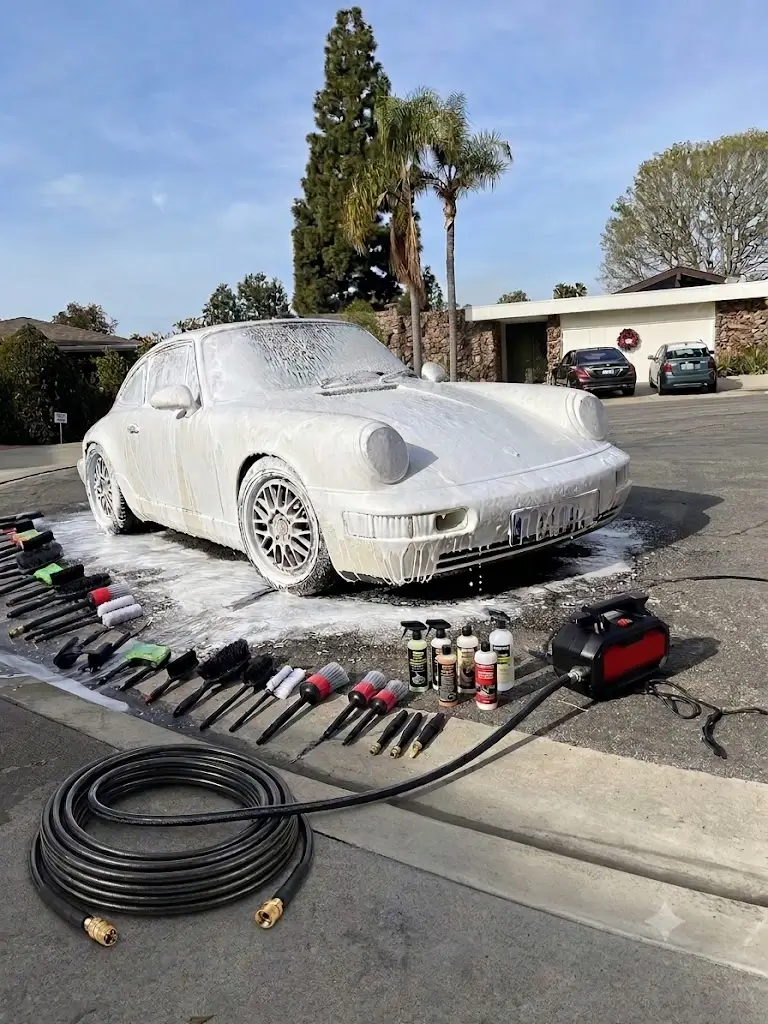
Vehicle detailing test in our garage layout using the Craftsman 1700 PSI model paired with a 1.1mm orifice foam cannon attachment.
Strategic Market Alternatives
Marketplace comparisons indicate that higher-flow induction models like the Active VE52 and Greenworks GPW2300 provide greater concrete stripping speed than the entry-level Craftsman.
To help establish a baseline market perspective, we compared the Craftsman side-by-side against three popular alternative electric options tracked in our best electric pressure washers guide:
| Model Selection | Best For | Cleaning Power Index (PSI × GPM) | Why Choose Over Craftsman? |
|---|---|---|---|
| Craftsman CMEPW1700 | Light Vehicle Rinsing & Compact Storage | 2,040 Cleaning Units (1700 PSI / 1.2 GPM) |
Baseline option with tight shelf storage limits. |
| Active VE52 | Prosumer Car Detailing & Thick Foam | 3,600 Cleaning Units (1800 PSI / 2.0 GPM) |
High 2.0 GPM flow yields thick foam cannon suds straight out of the box without changing orifices. |
| Ryobi RY142300 | Quiet Operation & Siding Cleaning | 2,760 Cleaning Units (2300 PSI / 1.2 GPM) |
Features a quieter induction motor built for longer continuous residential usage cycles. |
| Greenworks GPW2300 | Large Driveways & Brick Patios | 5,290 Max Units (2300 PSI / 2.3 GPM) |
Heavy-duty steel frame with massive water flow to clean wide flat concrete surfaces fast. |
Frequently Asked Questions (FAQs)
Diagnostic lab data clarifies motor architecture, water supply constraints, and electrical safety parameters for the Craftsman CMEPW1700.
Does the Craftsman CMEPW1700 use an induction motor?
Can this pressure washer draw water from an unpressurized rain barrel?
Can I use a surface cleaner accessory with this model?
What extension cord parameters are required to run this model safely?
Does this unit frequently trip garage GFCI outlets?
Why does the unit click on and off briefly when I am not squeezing the trigger?
Can the stock high-pressure hose be upgraded to a more flexible rubber option?
Final Scorecard: Craftsman 1700 PSI Pressure Washer Review
The Craftsman CMEPW1700 earns an overall benchmark rating of 6.9 / 10 by providing exceptional shelf storage efficiency and safe vehicle washing at a competitive entry-level price.
This scorecard rates the Craftsman CMEPW1700 relative to its direct marketplace competitors in the entry-level electric category:
| Evaluation Parameter | Calculated Rating | Performance Summary Notes |
|---|---|---|
| Storage Footprint Optimization | 92% | Top-tier choice for compact spaces; stores easily on narrow garage shelving. |
| Car Detailing Usability | 80% | Safe working pressure that cleans vehicle clear coats without risk of stripping paint. |
| Concrete / Driveway Stripping Velocity | 40% | Poor; small 1.2 GPM output means slow progress on wide stone surfaces. |
| Cumulative Index Rating | 6.9 / 10 | A compact, flat-standing unit built for light, localized home chores. |
📋 The Bottom Line: To conclude this Craftsman 1700 PSI pressure washer review, the CMEPW1700 is a practical tool for low-intensity residential maintenance. It delivers certified specifications in a highly portable package, making it a solid fit for car detailing, screen clearing, and light deck rinsing. However, buyers looking to clean broad concrete surfaces quickly should step up to a high-flow induction unit. For light, routine upkeep, this model offers dependable utility.
Ready to Buy the CRAFTSMAN CMEPW1700?
Check current pricing and retail availability directly on Amazon.
View Current Pricing on Amazon
Check Amazon’s latest price & Prime shipping availability
Related HomeGearMax Engineering Guides
- Best Electric Pressure Washers (Full Prosumer Guide)
- Best Quick Connect Fittings for Pressure Washers (M22 & QC Sizing)
- Best Turbo Nozzles for Pressure Washers (Rotary Orifice Guide)
- Best Pressure Washer Surface Cleaners for Concrete Driveways
- Best Foam Cannons for Auto Detailing and Orifice Selection
- How to Store a Pressure Washer and Prevent Winter Freeze Damage
- Brass Pump vs Aluminum Pump: Pressure Washer Metallurgy Explained
