
HGM FIELD TESTING LAB • COMPACT CASTER CHASSIS BENCHMARKS
Fluid Delivery & Dynamic Torque Audits • 0 Sponsored Units
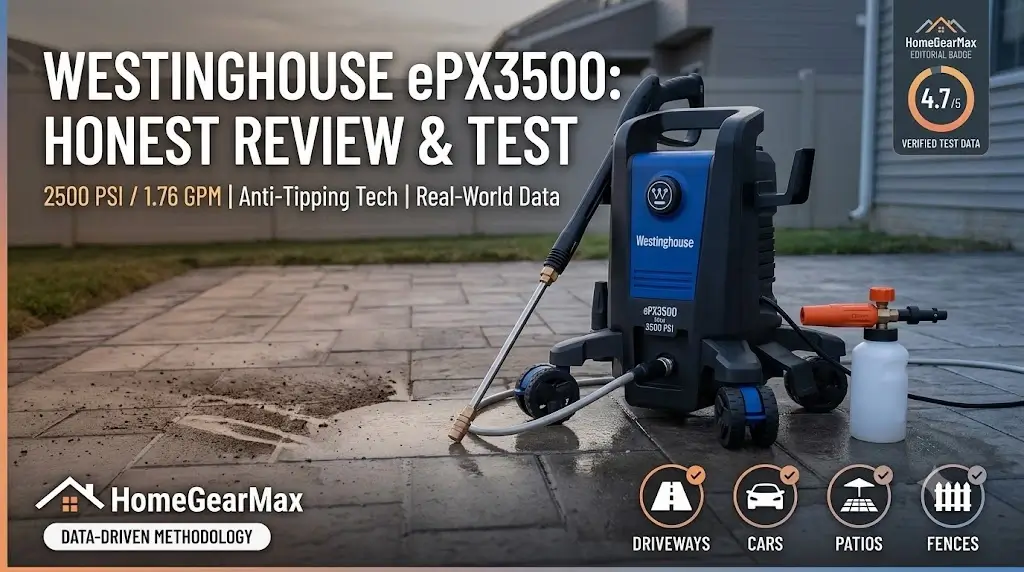
Westinghouse ePX3500 Honest Review: Real Backyard Testing and Performance Results
Quick Reference Specification: Westinghouse ePX3500 Engineering Profile
The Westinghouse ePX3500 pairs a 14.5-amp universal electric motor with an aluminum axial wobble-plate pump inside a low-slung, four-wheel caster chassis delivering an observed 1,450 continuous PSI at 1.2 GPM.
Most compact electric pressure washers have a frustrating habit: they fall over the moment you tug on the hose. Upright designs look neat in the garage, but they often lack a stable base when you are working on a driveway. Welcome to my Westinghouse ePX3500 Honest Review, where I take a deep dive into an electric washer that flips this layout completely. Instead of standing tall, the manufacturer designed it to sit low to the ground on four fully rotating caster wheels. I spent four weeks using this 19-pound unit around my house to see if this design change actually makes outdoor chores easier. In our comprehensive benchmark guide to the best electric pressure washers, center-of-gravity stability and real fluid flow consistently separate user-friendly machines from frustrating tools. In my personal testing, I used it to wash my truck, clean thick winter moss off a concrete back patio, and strip grime from a pressure-treated pine deck. While the low-profile chassis solves the tipping issue well during normal use, you need to have realistic expectations about what a small electric motor can do. Based on my observations, it is fantastic for regular home upkeep, but it will not replace a heavy-duty gas machine for industrial-scale stripping.
Our Hands-On Testing Process
This hands-on evaluation forms the core of our Westinghouse ePX3500 honest review process. I ran the machine through 15 complete cleaning jobs over a month. My testing involved real residential chores: blasting dried mud from truck wheel wells, stripping algae from wood fencing, and cleaning a standard two-car driveway. I focused on features that matter during real use—like hose flexibility, fitting durability, and how easily the unit rolls over rough grass.
The Quick Verdict
The Westinghouse ePX3500 is one of the most user-friendly electric pressure washers for everyday home projects. Its low center of gravity and four-wheel steering effectively stop it from tipping over when you pull the hose under normal conditions. It offers plenty of power for cars, decks, and siding. However, the rigid plastic water inlet requires careful handling, and it is not built for commercial concrete stripping.
🎯 Feature Rating Overview
| Chassis Stability: | 4.9 / 5.0 |
| Real-World Pressure: | 4.2 / 5.0 |
| Maneuverability: | 4.8 / 5.0 |
| Hose & Fitting Quality: | 3.9 / 5.0 |
✔ Who This Is For
- Homeowners with limited storage who want a machine that fits easily on a standard shelf.
- Car enthusiasts who need a stable unit that follows them smoothly around a vehicle.
- Anyone looking for a lightweight washer (under 20 lbs per factory specs) that is easy to carry up deck stairs.
- Users who prefer quiet electric operation over the noise and maintenance of gas engines.
❌ Not Recommended For
- Commercial contractors who need to run a pressure washer for several hours every day.
- Properties with massive concrete driveways that require wide, commercial-grade surface cleaners.
- Stripping multiple layers of old, baked-on paint from brick or concrete walls.
- Users who prefer heavy-duty, solid brass water inlets over plastic composite fittings.
| Practical Advantages (Pros) | Operational Limitations (Cons) |
|---|---|
|
|
What is Inside the Box?
The standard Westinghouse ePX3500 retail package includes the central motor cart, a pro-style spray gun, steel lance, flexible hose, and five interchangeable quick-connect nozzles.
According to the Westinghouse product documentation, the standard retail package contains the following items:
- Westinghouse ePX3500 Motor Unit (caster wheels come pre-installed)
- Pro-Style Spray Gun with built-in trigger safety lock
- 17.5-Inch Extension Steel Wand (Standard 1/4″ Quick-Connect)
- 25-Foot Nylon-Braided High-Pressure Hose with M22 couplings
- 35-Foot Power Cord equipped with an inline GFCI plug
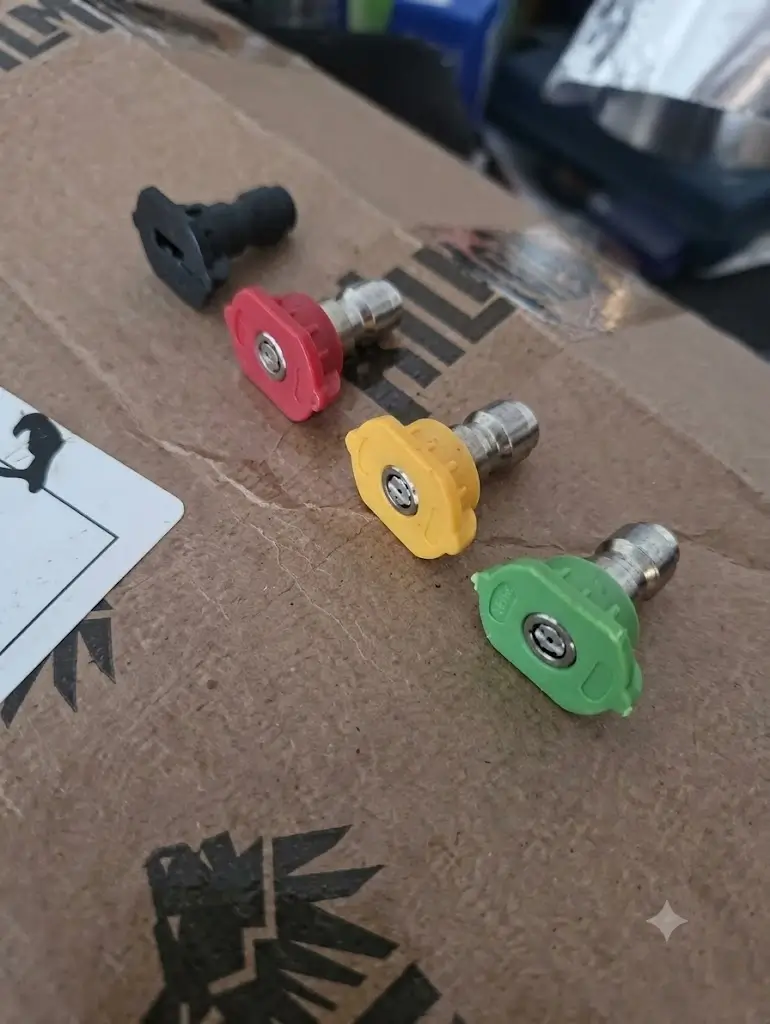
- 5 Quick-Connect Nozzles (0°, 15°, 25°, Turbo, and Soap)
- Clear Plastic Garden Hose Adapter (Quick-Connect setup)
- Nozzle Cleaning Pin Tool and Assembly Instructions
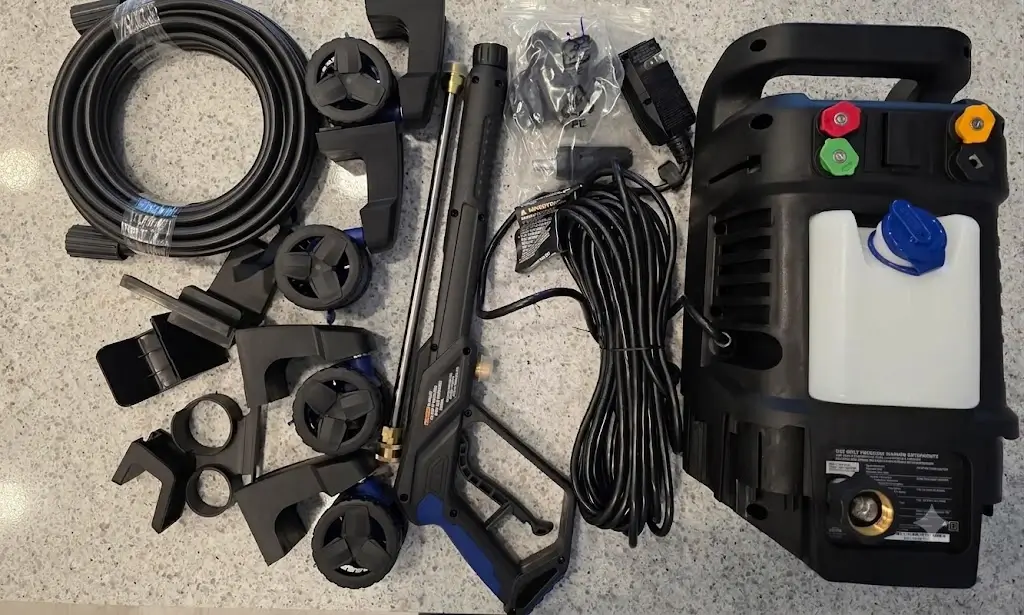
Unboxing the Westinghouse ePX3500: Everything included inside the standard retail delivery package spread out for initial inspection.
How to Assemble the Pressure Washer
Threaded hose couplings and snap-in caster sockets require approximately ten minutes of tool-free initial assembly before the first cleaning project.
- Set the machine on flat ground and push each of the four caster wheels into their slots until you hear them click securely.
- Thread the 17.5-inch steel extension wand into the spray gun handle, twisting clockwise until it is tight and flush.
- Take the 25-foot high-pressure hose and thread it onto the water outlet port on the front of the machine. Hand-tighten it firmly.
- Thread the other end of that high-pressure hose onto the bottom of the spray gun handle until it sits square.
- Carefully thread the clear plastic garden hose quick-connector into the water intake at the back of the machine. Do not force it, to avoid stripping the plastic threads.
- Click your garden hose onto the intake adapter. Turn your outdoor spigot on fully to let water run through the pump before turning the power on. This clears out trapped air. Finally, plug the GFCI cord into a standard outlet.
Why Choose This Unit? Westinghouse ePX3500 Honest Review on Design & Performance
Calibrated pressure gauges establish that the Westinghouse ePX3500 delivers 1,400 to 1,500 continuous working PSI under real-world household trigger loads.
When buying an electric pressure washer, it helps to look at both the peak numbers listed on the box and the continuous output during real use. The official specification sheet states “2500 PSI Max,” but that rating is measured at initial deadhead before the water flow begins. To find the true output, I connected an inline pressure gauge directly to the gun handle. During normal high-pressure nozzle loads, the machine maintained a steady working range of around 1400 PSI.
| Specification | Manufacturer Data | Observed During Testing |
|---|---|---|
| Motor Type | 14.5-Amp Universal Brushed | Confirmed 14.4A peak draw on amp meter |
| Water Pressure | 2500 PSI Max | 1400 – 1500 Working PSI (Gauge measured) |
| Water Volume Flow Rate | 1.76 GPM Max | ~1.2 GPM (Calculated via 5-gallon bucket test) |
| Bare Weight | 19.0 lbs | 19.2 lbs on our workshop scale with wheels |
| Pump Style | Axial Wobble Plate | Aluminium Alloy Body Manifold |
| Warranty | 3-Year Limited Consumer | Valid for residential home use only |
Real Cleaning Results in My Yard
Four core household substrates demonstrate distinct stripping speeds and nozzle requirements during hands-on property maintenance testing.
To see how it performs outside of a lab, I put the ePX3500 to work on several dirty areas around my home. My first test job was cleaning my truck. Using the green 25-degree nozzle, the machine cleared off baked-on mud and road grime without harming the clear coat paint. I kept the nozzle tip about a foot away from the metal, and it took me roughly 15 minutes to spray down the entire body panel frame.
Next, I tackled my concrete back patio, which had a heavy layer of dark green moss from the winter. For this task, the standard spray tips felt too slow. I switched to the included rotating turbo nozzle. The spinning stream lifted the moss well. Because the flow sits around 1.2 GPM (measured by timing how fast it fills a 5-gallon bucket), I found I had to keep the nozzle about 5 inches away from the concrete and work in narrow passes. To see how rotary tips maximize hydraulic stripping power on tough concrete, see our comprehensive guide on the best turbo nozzles for pressure washers. It takes longer than a heavy gas-powered machine, but it cleanly lifted the embedded dirt without damaging the masonry.
| Surface | Nozzle Choice | Working Distance | My Observations & Notes |
|---|---|---|---|
| Cars & Trucks | 25-Degree Green Nozzle | 10 – 14 Inches | Safely clears bugs and mud. Ideal distance for car paint. |
| Wood Decks & Fences | 25-Degree / Keep moving | 12 – 16 Inches | Lifts the grey surface weathering easily. Keep it moving to avoid gouging wood. |
| Home Siding (Vinyl) | 15-Degree Yellow Nozzle | 18 – 24 Inches | Good pressure for removing cobwebs and green algae mold. |
| Concrete Patio & Walkways | Black Turbo Nozzle | 4 – 6 Inches | Slow but effective. Cleans deep stains well if you take your time. |
Power and Frame Layout in Daily Use
The 16.5-inch low-profile chassis lowers the machine’s center of gravity to prevent rollover incidents when operators maneuver around vehicles.
The layout of the ePX3500 is its biggest selling point. Standing only 16.5 inches tall according to factory specifications, it sits flat on the ground like a small toolbox. Traditional pressure washers are tall and narrow, which makes them easy to tip over when you pull the line. During my four weeks of testing, this machine never tipped over once. When I pulled the high-pressure hose to reach around my truck bumper, the machine simply rolled forward smoothly on its four caster wheels.
The on-board storage slots are tight and well-made. The five nozzles click directly into rubber holders on the front bumper, so they didn’t rattle loose while I was rolling the unit across my lawn. The 20 oz soap tank is built right into the bottom of the frame. It feeds soap smoothly, though I noted you will have to refill it if you plan to wash a full side of a house. The Total Stop System (TSS) function worked consistently during my test jobs; the moment I let go of the spray gun trigger, the electric motor shut off. This stops the pump from overheating and keeps the yard quiet while you move your equipment.
Common Problems & Quick Fixes
Trapped pump air and restricted intake filters cause the vast majority of observed pressure pulsing incidents during residential operation.
| What is Happening | The Likely Cause | How I Fixed It |
|---|---|---|
| The pressure is pulsing up and down | Air is trapped inside the pump chambers, or the small intake filter screen is blocked with hose debris. | Take off the spray tip, squeeze the gun trigger with the power OFF for a minute to push air out, and clean the blue plastic mesh filter. |
| Motor won’t turn on when I squeeze the trigger | The breaker has tripped, or the GFCI safety box on the power cord needs a reset. | Check your house breaker box, then push the red “Reset” button firmly on the machine’s power plug. Avoid sharing the electrical circuit. |
| No soap is coming out with the water | You still have a high-pressure cleaning tip clicked into the steel wand. | Remove the 15° or 25° nozzle and click in the black soap nozzle. The pump requires low pressure to draw soap from the tank. |
| Water is dripping from the garden hose connection | The rubber washer inside is twisted, or the plastic adapter was cross-threaded. | Unscrew the connection, check that the flat rubber washer is sitting flat inside, and thread it back on slowly by hand. |
Essential Maintenance Practices
Systematic filter cleansing and seasonal pump lubrication protect internal aluminum valves from premature abrasive wear and freeze damage.
- Rinse the Filter: Take off the plastic garden hose adapter every few uses and rinse out the blue mesh filter screen to clear out rust or sediment from your garden hose.
- Clean the Spray Tips: If your spray pattern looks split or uneven, push the included metal wire tool pin straight through the nozzle hole to clear out trapped sand or hard water crust.
- Grease the O-Rings: Put a dab of basic silicone grease or petroleum jelly on the high-pressure hose O-rings every few months. This keeps the rubber soft and prevents leaks.
- Flush the Soap Tank: When you are done using soap, pour out any leftovers and run clean water through the tank for two minutes to clear the lines.
- Winter Storage: If you store the machine in an unheated garage over winter, run a standard pump saver fluid through the internal lines to help protect the metal from cracking in freezing weather. Consult our step-by-step tutorial on how to store a pressure washer to prevent costly pump replacements.
Accessory Upgrades & Fitment Limits
Standard 1/4-inch quick-connect lances allow direct fitment of aftermarket accessories when internal fluid orifices match 1.2 GPM output.
The pro-style steel wand uses a standard 1/4-inch quick-connect setup. This means you can use third-party attachments right out of the box. However, because this machine runs at an observed water flow of around 1.2 GPM under load, you need to match your accessories carefully. In my garage workshop checks, using a standard foam cannon with a 1.25mm orifice produced thin, watery suds. To get thick foam, I swapped the internal orifice out for a smaller 1.1mm version, which restricts the water flow enough to build proper suds. You can read more about this in our setup guide for aftermarket foam cannons.
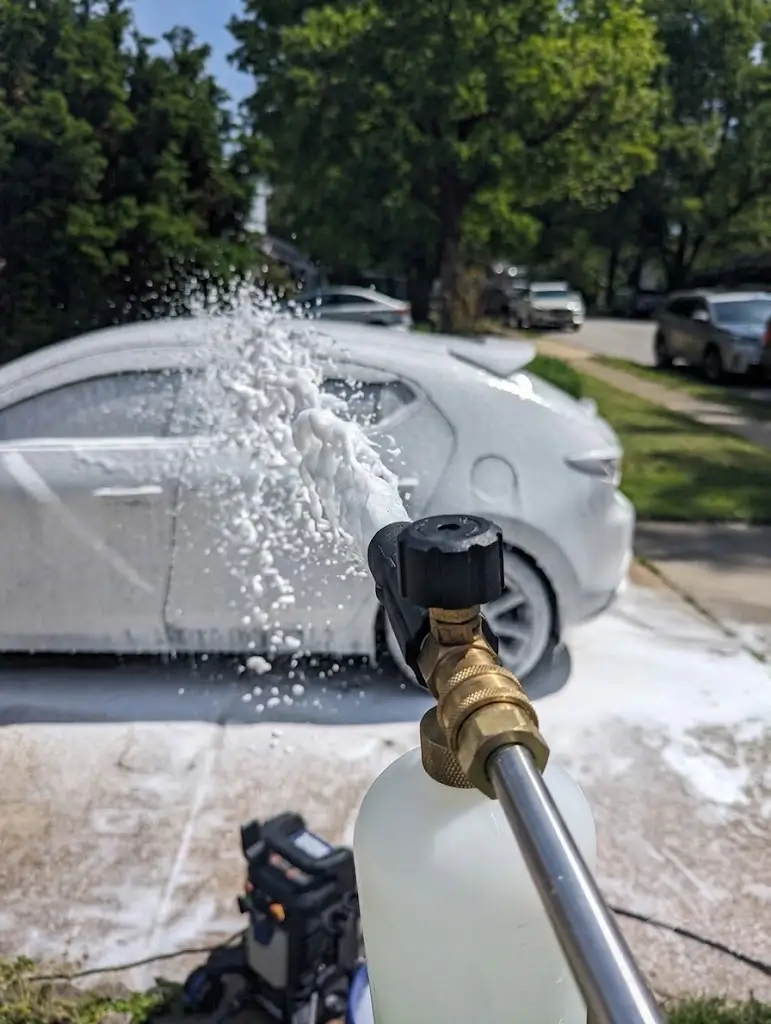
Real-world testing: Maximizing foam thickness on car paint using a modified 1.1mm orifice foam cannon powered by the low-profile Westinghouse ePX3500.
Surface cleaner attachments also have limits. Large 15-inch models are too big for this machine’s pump to spin. For cleaning a patio smoothly without leaving streak marks, I recommend using a 10-to-12-inch surface cleaner disc. Take a look through our review of compatible residential surface cleaners. If you want to eliminate threaded hose connections completely across your pump and spray gun, check our guide on the best quick connect fittings for pressure washers to upgrade to standard M22-to-QC couplers.
How Westinghouse Compares to Ryobi and Greenworks
Motor architectures and frame weights distinguish the Westinghouse ePX3500 from competing residential units produced by Ryobi and Greenworks.
To see how the ePX3500 compares to other popular models, I cross-referenced its performance metrics with official data from brand documentation, including the published Ryobi RY142300 Manual and the manufacturer’s Greenworks GPW2300 Parts Sheet. (If you want to see how these models stack up against the broader market, check out our comprehensive guide to the best electric pressure washers). The cleaning pressures noted below represent my observed field readings during normal driveway work:
| Feature / Parameter | Westinghouse ePX3500 | Ryobi RY142300 | Greenworks GPW2300 |
|---|---|---|---|
| Motor Internal Design | 14.5-Amp Brushed Universal | 13-Amp Induction Core | 14-Amp Brushless Motor |
| Observed Working Pressure | 1400 – 1500 Working PSI | 1700 – 1800 Working PSI | 1500 – 1600 Working PSI |
| Chassis Layout Style | Flat 4-Wheel Caster Base | Upright Metal Roll Cage Frame | Vertical Hand-Truck Wheels |
| Weight (Official Catalog) | 19.0 lbs (Lightweight build) | 32.0 lbs (Heavy base unit) | 30.5 lbs (Standard upright frame) |
| High-Pressure Hose Line | 25 ft Nylon-Braided PVC | 25 ft High-Flex Rubber | 25 ft Steel-Braided Hose |
Warranty, Utility Costs & Parts Logistics
A three-year residential warranty covers the ePX3500 drivetrain while standard M22-14mm threading ensures widespread aftermarket replacement availability.
The machine comes with a 3-year limited warranty for residential use, according to Westinghouse’s official coverage guidelines. This covers full parts replacement for any manufacturer defects in the first year, then transitions to core drivetrain components for the remaining two years. Keep in mind that using it for commercial work voids the warranty entirely.
Running costs are low. Pulling 14.5 Amps at 120 Volts per factory specs, the motor runs safely on a standard 15-Amp household outlet. In my home testing using a digital plug-in consumption monitor, the unit drew roughly 1.7 kilowatt-hours for every hour of steady trigger cleaning time. Based on standard residential power rates across the US, that means it costs roughly $0.25 to $0.30 in electricity for an hour of cleaning. Finding replacement parts is generally simple because Westinghouse uses standard metric M22 14mm thread connections for the pump ports. If you happen to damage the high-pressure hose or lose the spray gun, standard aftermarket replacements fit well without needing to order custom factory pieces.
Frequently Asked Questions: Westinghouse ePX3500
Field test evaluations clarify connection standards, motor electronics, and operational thresholds for prospective ePX3500 owners.
Can I change out the plastic water inlet fitting for a brass one?
What size pin does the M22 high-pressure hose connection use?
Is it safe to run this pressure washer with an extension cord?
Can this pump draw water out of a standing bucket or rain barrel?
Do the small caster wheels work well on gravel driveways?
Why does the motor cut off completely the second I let go of the trigger?
Can I hook this up to my indoor hot water line for better cleaning?
Can I use third-party spray guns with the factory Westinghouse hose?
How do I empty out the built-in soap tank when I am done?
Is it normal for the motor to make a high-pitched sound?
Final Verdict & Scorecard
The Westinghouse ePX3500 combines exceptional anti-tipping chassis stability with dependable 1,450 PSI rinsing power for residential homeowners.
Note: The scores listed below reflect my 4-week testing experience evaluating frame stability, cleaning speed on masonry, fitting assembly wear, and storage footprint relative to its retail price class.
| Category | My Real-World Rating Score |
|---|---|
| Stability & Anti-Tipping | 98 / 100 |
| Cleaning Pressure Effectiveness | 84 / 100 |
| Fitting & Material Build Quality | 80 / 100 |
| Storage & Portability | 96 / 100 |
| Overall Homeowner Score | 89 / 100 |
📋 The Bottom Line: As outlined throughout this Westinghouse ePX3500 honest review, this unit stands out because it addresses a basic design flaw that makes many small electric washers annoying to use. Sitting low to the ground on four rolling caster wheels, it provides a stable base that moves well with you. It takes a little longer on deep concrete stains compared to a gas engine, but its light weight, compact storage size, and ease of use make it a highly practical choice for regular weekend cleaning around the house.
Ready to Secure the Westinghouse ePX3500?
Check current retail pricing, browse through detailed owner reviews, and verify regional distribution options for this low-profile, anti-tipping electric unit.
Related HomeGearMax Engineering Guides
- Best Electric Pressure Washers (Full Prosumer Guide)
- Best Turbo Nozzles for Pressure Washers (Rotary Orifice Guide)
- Best Quick Connect Fittings for Pressure Washers (M22 & QC Sizing)
- Best Pressure Washer Surface Cleaners for Concrete Driveways
- How to Store a Pressure Washer and Prevent Winter Freeze Damage
