
How to Store a Pressure Washer: Gas & Electric Storage Guide
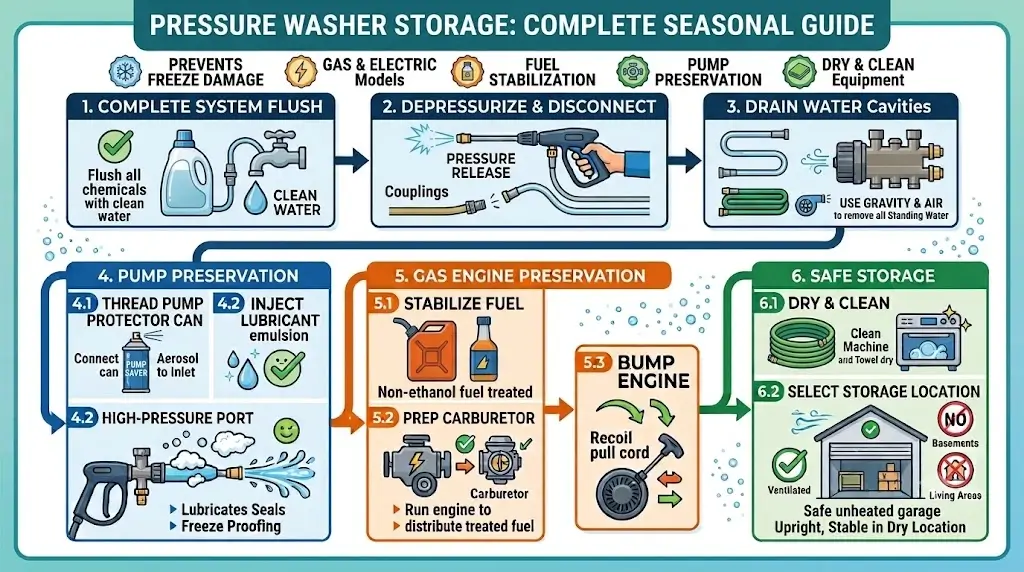
The correct way to store a pressure washer depends on storage duration (overnight vs. seasonal), power architecture (internal combustion vs. induction motor), and ambient thermal conditions. Proper storage prevents two primary mechanical failure modes: trapped residual water freezing inside the pump head, and volatile gasoline deteriorating into acidic varnish within the carburetor circuit.
Routine short-term storage takes under five minutes of mechanical shutdown. Seasonal off-season preservation requires fluid-circuit isolation: purging water from check-valve cavities, applying chemical pump conditioners, stabilizing fuel reserves, and storing equipment within an environment matched to its engineering specifications.
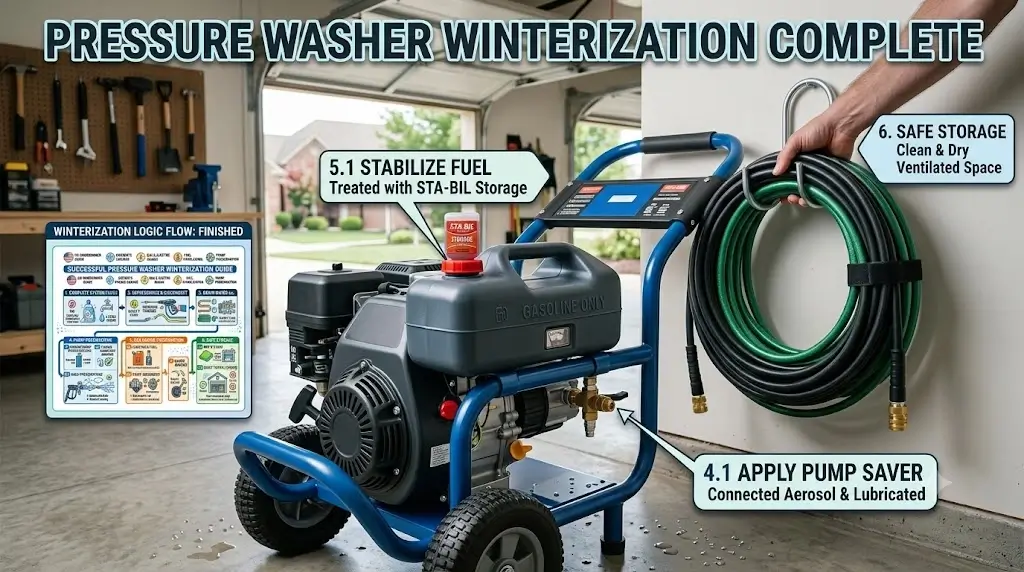
Storage requirements vary by pump architecture (direct-drive axial cam vs. industrial triplex) and engine brand. The operator manual takes priority for fuel stabilization, pump conditioner injection, crankcase maintenance, and ventilation clearances.
Quick Answer: How Do You Store a Pressure Washer?
Post-Operation Routine (Short-Term): Turn off engine/motor, shut water source, squeeze trigger to vent trapped hydraulic pressure, flush detergent siphon lines, drain hoses, and store in a clean, shaded space.
Off-Season Storage (>30 Days or Winter):
- Purge Water Cavity: Inject pressurized pump saver through the garden hose inlet until white foam expels from the high-pressure outlet.
- Preserve Fuel (Gas): Add fuel stabilizer to fresh non-ethanol fuel, run engine for 2 minutes to treat carburetor passages, then close the fuel petcock. For multi-month storage, run the carburetor dry.
- Condition Seals: Apply pure silicone grease to rubber O-rings on high-pressure quick-connect fittings.
- Position Safely: Store upright in a dry location. Keep electric units in freeze-free indoor rooms and gas machines in detached, well-ventilated garages.
Pressure Washer Storage at a Glance
| Storage Scenario | Gasoline Pressure Washer Protocol | Electric Pressure Washer Protocol |
|---|---|---|
| Overnight to 7 Days | Normal shutdown, bleed line pressure, drain garden hose, store upright in shed/garage | Unplug GFCI, release trigger pressure, drain hoses, coil cord onto frame caddy |
| 30 to 90 Days | Add fuel stabilizer, run engine 3 mins, shut fuel valve, coat coupler O-rings | Purge chemical pickup tube, store away from concrete dampness, keep dry |
| Winter Off-Season | Inject pressurized pump saver, treat fuel or run dry, store in ventilated space | Inject pump saver / propylene glycol, store inside heated envelope (>40°F / 4°C) |
| Freezing Climate Risk | Mandatory pump protector; do not rely on unheated garage ambient warmth | Mandatory pump protector; store inside basement, utility closet, or heated room |
| Spring Re-Commission | Inspect oil level, check fuel clarity, flush pump before firing ignition | Inspect cable for cracking, flush lines with clear water without spray tip |
Why Proper Pressure Washer Storage Matters
A pressure washer can appear completely dry externally while retaining several fluid ounces of standing water trapped between internal check-valve cages, ceramic plungers, and unloader bypass channels. If trapped water experiences sub-freezing temperatures (below 32°F / 0°C), hydraulic ice expansion fractures brass pump castings.
For gasoline engines, modern ethanol fuel blends (E10/E15) absorb atmospheric moisture. Within 30 days, stagnant fuel separates into corrosive water-alcohol layers that plug pilot jets and corrode aluminum float bowls. For a complete look at maintenance intervals, consult our pressure washer maintenance schedule.
Before Storing a Pressure Washer: Let the Machine Cool
Never cover or store a gasoline pressure washer immediately following operation. Small-engine mufflers and cylinder fins operate at temperatures exceeding 400°F (204°C). Allow the machine to cool in an open area for at least 30 minutes before moving it to a confined shed or garage.
Muffler heat can ignite volatile fuel vapors or melt synthetic dust covers, presenting severe fire risks.
Step 1: Shut Down the Pressure Washer Correctly
To prevent mechanical strain, follow standard operating shutdown procedures outlined in our pressure washing safety guide:
- Turn the engine ignition switch to OFF or depress the electric motor OFF rocker switch.
- Turn off the garden hose water spigot completely.
- Disconnect the electrical power cord on electric models.
- Point the spray lance into an open space and squeeze the trigger to release trapped line backpressure.
- Uncouple the garden hose from the pump inlet fitting.
- Disconnect the high-pressure hose from the pump brass discharge outlet.
Step 2: Flush Detergent From the System
Chemical detergents left in the downstream injector dry into crystallized alkaline deposits that stick stainless check balls and degrade internal springs:
Chemical Flushing Protocol
- Extract the detergent pickup tube from the soap reservoir.
- Submerge the weighted filter into a container of clean, warm freshwater.
- Run the washer on low pressure (using the 65° black soap tip) for 60 seconds.
- Wipe down the injector barb and store chemical bottles separately.
Step 3: Drain the Pressure Washer
Gravity-draining hoses clears lines but leaves water inside pump chambers. Lay high-pressure and garden hoses on a downward slope to evacuate water. Never turn over a gas engine dry for extended periods to clear water; dry rotation generates friction that tears internal pump packings.
How to Store a Pressure Washer in Freezing Weather
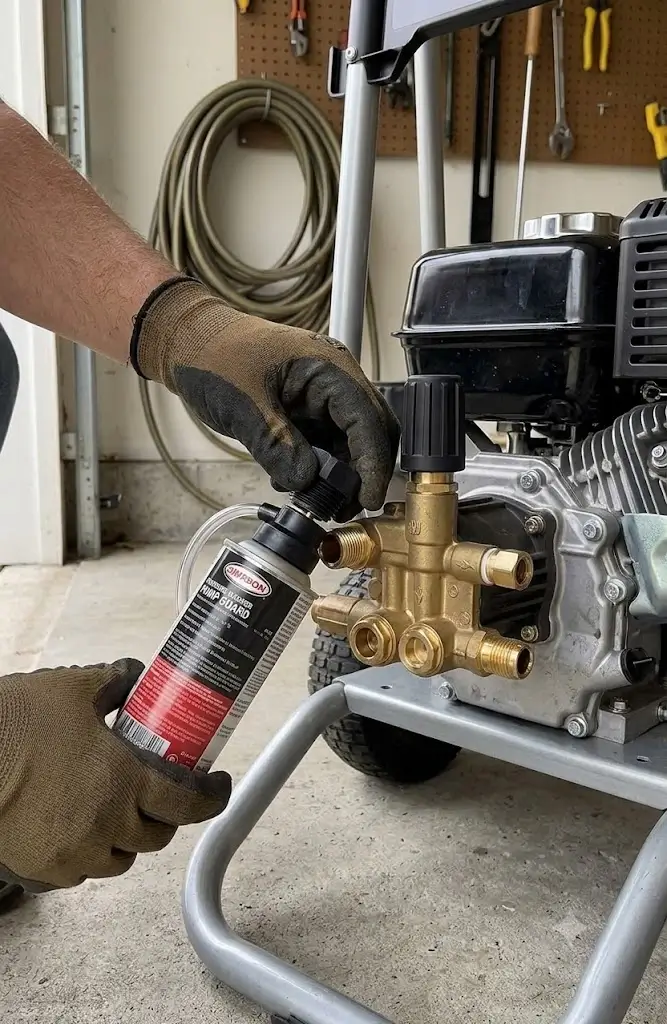
Winterizing is essential maintenance for equipment stored in cold climates. Review our complete guide to how to winterize a pressure washer to learn how aerosol pump protectors safeguard internal check-valves and unloader bodies.
Storing a machine inside an unheated shed or garage does not protect against freezing. If outside air drops below freezing for 24 hours, unheated building interiors will follow, requiring chemical pump protection.
Pressure Washer Winter Storage Checklist
- ☐ Flush chemical siphon circuits with fresh water.
- ☐ Vent trapped hydraulic line pressure through the spray gun.
- ☐ Disconnect and drain both water hoses completely.
- ☐ Inject aerosol pump protector until foam exits the discharge port.
- ☐ Treat fuel tank with non-alcohol stabilizer; run engine to treat carburetor.
- ☐ Close the fuel petcock shutoff valve.
- ☐ Clean external chassis, wiping away grease, grime, and mud.
- ☐ Apply pure silicone grease to quick-connect rubber O-rings.
- ☐ Store upright in a dry, ventilated, freeze-proof location.
How to Store a Gas Pressure Washer
Gasoline units require combustion engine care alongside water system protection:
1. Fuel System Management
For storage between 30 and 90 days, fill the tank to 95% with non-ethanol fuel treated with stabilizer to limit internal tank condensation. For storage exceeding 90 days, close the fuel valve and run the engine until it starves of fuel, emptying the carburetor bowl.
2. Engine Crankcase Lubrication
Change engine oil before long off-season storage if the runtime threshold has been reached. Used motor oil holds combustion acids that pit internal bearing surfaces over long periods of inactivity.
3. Air Filter & Cooling Fin Inspection
Brush away dirt from engine cooling fins and clean the foam air pre-filter. Mice frequently nest in engine blower housings during winter; clearing debris helps keep cooling passages open.
Do not store gas pressure washers in basements, laundry utility rooms, or near water heaters. Fuel vapors settle along floorboards and present ignition hazards.
How to Store an Electric Pressure Washer
Compact units from our tested best electric pressure washers are simpler to store, but their plastic pump housings are sensitive to freezing stress:
- Disconnect power plug from the wall; wind the cable in large loops.
- Vent residual line pressure by opening the spray gun trigger.
- Inject pump protector into the inlet; bump motor for 1 second to coat wobble plates.
- Store the machine indoors inside a heated utility room or basement above 40°F (4°C).
How to Store a Pressure Washer Hose
High-pressure hoses use steel wire braiding encased in thermoplastic or rubber jackets. Never store a high-pressure line coiled around tight frame hooks. Loop the hose into 24- to 30-inch loops and hang it across a curved wall-mounted saddle.
Hang drained hoses in broad loops on curved wall hangers off concrete floors.
Leave lines pressurized, exposed to direct sun, or crimped under equipment tires.
Do not use hose clamps, electrical tape, or compression splices on 3,000+ PSI lines. Replace damaged lines with OEM-rated assemblies.
How to Store a Spray Gun, Wand, and Nozzles
Disconnect the lance barrel from the trigger handle. Hold the trigger gun upright with the inlet down and cycle the handle to drain water. Store individual spray tips (0°, 15°, 25°, 40°, soap) inside an organized rubber caddy. Clear clogged orifices using a fine wire pick before storage.
Should You Store a Pressure Washer With the Hose Attached?
For short-term storage (under a week), leaving the hose attached is acceptable if line pressure has been vented. For seasonal or long-term storage, always disconnect hoses. Disconnecting lines allows internal water to drain, relieves stress on pump ports, and lets you apply silicone grease to connection O-rings.
Should You Cover a Pressure Washer?
Use breathable, water-resistant canvas covers that let trapped moisture escape. Never drape non-breathable plastic sheets tightly around equipment. Trapped condensation corrodes raw metal bolts, rusts unpainted engine brackets, and degrades electrical switch contacts.
Where Is the Best Place to Store a Pressure Washer?
| Storage Area | Suitability | Key Environmental Considerations |
|---|---|---|
| Climate-Controlled Garage / Workshop | Ideal | Prevents water freezing; keeps electrical switches and pump seals dry. |
| Dry Unheated Garage | Good (Treated) | Requires pump saver injection; keep away from water heater pilot flames. |
| Outdoor Shed | Acceptable | Keep off bare soil; use rodent repellent around wiring and engine shrouds. |
| Basement / Crawlspace | Electric Only | Safe for electric models; strictly prohibited for gas models due to fuel vapors. |
| Exterior Yard Under Tarpaulin | Not Recommended | Severe condensation rusts engines, blisters hoses, and freezes pumps. |
Can You Store a Pressure Washer Outside?
Avoid outdoor storage. Rain, morning condensation, and ultraviolet rays rust steel frames, degrade rubber seals, and corrode electrical circuits. If outdoor storage is unavoidable, apply pump protector, drain the fuel system completely, elevate the machine off damp ground on a wooden pallet, and protect it with a ventilated equipment cover.
Pressure Washer Storage in Cold Climates vs. Hot Climates
| Climate Profile | Primary Mechanical Threat | Recommended Storage Protocol |
|---|---|---|
| Cold / Sub-Freezing | Trapped water expansion cracking brass pump heads | Aerosol pump saver displacement; indoor storage for electric models. |
| Hot / Arid | Ultraviolet degradation; fuel evaporation and gumming | Store out of direct sunlight; use fuel stabilizer to prevent gumming. |
| Humid / Subtropical | Atmospheric condensation rusting unpainted surfaces | Store in well-ventilated spaces; spray unpainted iron with corrosion inhibitor. |
| Coastal / Marine | Airborne salt fog pitting brass, aluminum, and fasteners | Rinse exterior thoroughly; apply light silicone film to metal surfaces. |
What Not to Do When Storing a Pressure Washer
- Do Not Store Pressurized: Leaving 3,000 PSI trapped inside lines stresses valve packings and weakens hose inner tubes.
- Do Not Store Directly on Bare Concrete: Concrete pulls heat and draws moisture, accelerating tire flat-spotting and hose rot.
- Do Not Leave Ethanol Gas Untreated: Untreated pump gas goes stale in 30 days, gumming up carburetor fuel jets.
- Do Not Store Gas Units Indoors: Fuel fumes sink to floor level, presenting fire risks in occupied structures.
- Do Not Forget Pump Lubricants: Ensure serviceable triplex pumps have clean crankcase oil by following our pressure washer pump oil guide before seasonal storage.
Spring Startup After Long-Term Storage
Before pulling the starter cord or powering up the motor in the spring, inspect your equipment:
- Fluid Checks: Inspect engine oil level on gas models; verify triplex pump sight glass displays clean amber fluid.
- Flush Pump Saver: Hook up garden hose water (engine/motor OFF) and squeeze the trigger for 60 seconds to flush storage fluid out of the wand.
- Fuel Inspection: Ensure fuel is clean and water-free; open the fuel petcock.
- Purge Trapped Air: Hold the trigger open until water flows steadily without air spitting before starting the engine or motor.
Frequently Asked Questions
Can I leave water in my pressure washer overnight?
Yes, provided temperatures remain above freezing (32°F / 0°C) and line pressure has been released. If overnight freezing is forecast, disconnect the water supply, drain lines, and inject pump protector immediately.
Should I drain the water from my pressure washer?
Yes. Drain hoses and accessories after every cleaning session. For seasonal off-season storage, draining hoses alone is not enough; you must inject pressurized pump saver to displace water trapped inside internal check-valve cavities.
How do I store a pressure washer for the winter?
Flush out detergent lines, disconnect and drain hoses, inject pump protector into the inlet port, add fuel stabilizer to fresh gas (or drain the carburetor bowl on gas models), and store in a dry, covered space.
Can I store a pressure washer in an unheated garage?
Yes, provided the pump has been conditioned with pump protector. An unheated garage shields equipment from weather, but its internal temperature drops below freezing during cold snaps.
Can I store a pressure washer outside?
Outdoor storage is not recommended. Precipitation, humidity, and temperature swings accelerate frame corrosion, degrade hose rubber, and ruin electrical switches. If unavoidable, elevate the frame on a pallet and cover with a breathable canvas tarp.
Should I remove the hose before storing a pressure washer?
Yes. Removing both hoses allows residual water to drain, relieves bending stress on pump outlet necks, and lets you inspect and grease coupling O-rings.
How should I store a gas pressure washer?
Flush detergent lines, vent water pressure, treat fuel with stabilizer, shut the fuel valve, inject pump saver, and store upright in a dry, ventilated garage or shed away from ignition sources.
How should I store an electric pressure washer?
Unplug from the electrical outlet, vent trapped water pressure, drain hoses, inject pump saver, and store indoors in a basement, utility closet, or heated room above 40°F (4°C).
Can freezing temperatures damage a pressure washer?
Yes. Freezing water expands by roughly 9%, generating internal pressures that crack brass manifolds, shatter ceramic plungers, and unseat internal check valves.
Do I need to use antifreeze in a pressure washer?
Use non-toxic RV propylene glycol or dedicated aerosol pump saver. Never use automotive ethylene glycol coolant, which damages internal pump seals and presents toxic disposal issues.
What should I do before using a pressure washer after winter storage?
Check engine and pump oil levels, connect garden hose water with the motor OFF, and squeeze the trigger for 60 seconds to flush out winterizing fluid before firing the engine or motor.
Final Storage Mandate: Purge Water, Protect Fuel, Choose the Right Space
Proper pressure washer storage comes down to three steps: displace trapped manifold water with an approved pump protector, stabilize the fuel system against ethanol degradation, and match the storage environment to your machine’s power platform.
Displace manifold water with pump saver, stabilize or drain gasoline fuel systems, lubricate rubber O-rings, and store electric models in warm indoor rooms and gas models in well-ventilated outbuildings.
