
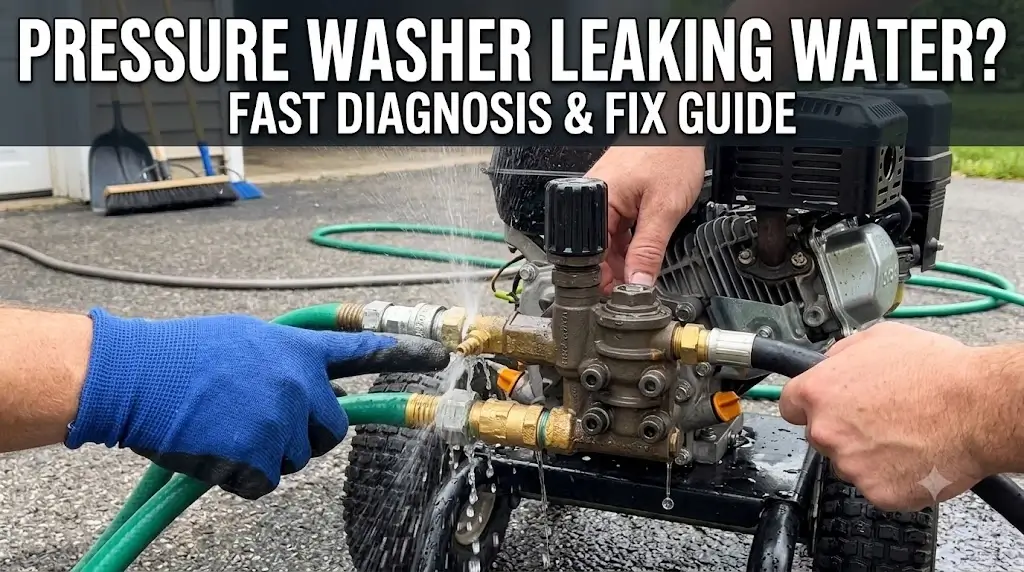
Pressure Washer Leaking Water? Causes, Fixes & Troubleshooting Guide
A pressure washer leaking water stems either from an external sealing failure (low-pressure garden hose coupling, quick-connect O-ring, or split delivery hose) or an internal hydraulic breakdown (cracked brass manifold, worn high-pressure packings, weeping thermal relief valve, or unloader bypass blow-by). The diagnostic path depends on two variables: the exact physical leak location and whether water escapes when the machine is static (off), active (spraying), or in bypass (trigger released).
This technical guide details leak isolation protocols for axial-cam and industrial triplex plunger pumps across both gas and electric platforms, isolating mechanical failures from minor field-replaceable elastomer seals.
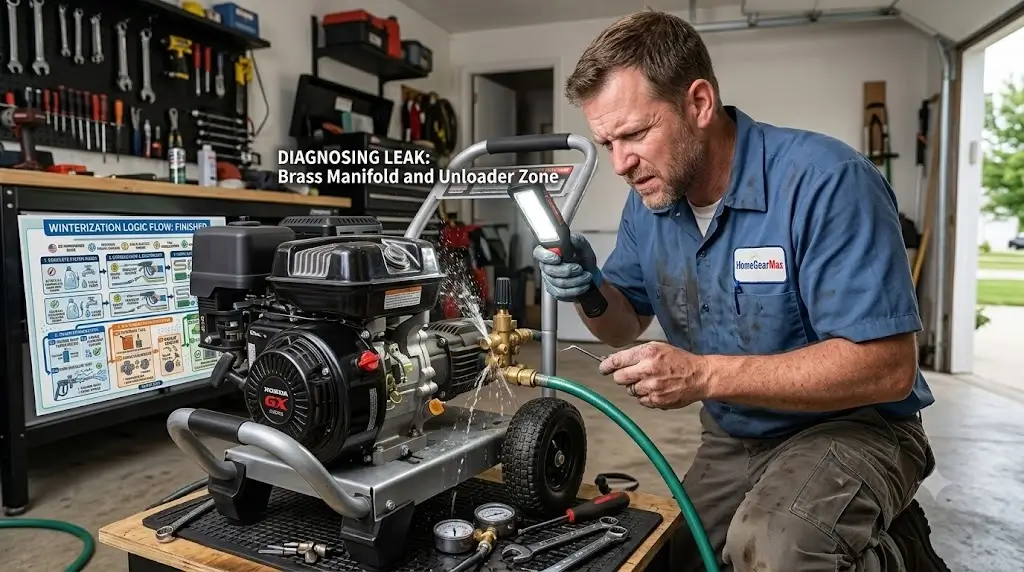
Hydraulic tolerances vary between residential axial pumps and serviceable triplex pumps. For component disassembly, torque specifications (typically 18–22 ft-lbs for manifold bolts), and replacement seal kits, always cross-reference your machine’s service manual before servicing internal fluid ends.
Quick Answer: Why Is My Pressure Washer Leaking Water?
Over 80% of pressure washer leaks result from damaged elastomeric seals or fittings:
- Leaking While OFF (Static Water On): Garden hose inlet seal is missing or flattened; garden hose brass fitting is cross-threaded; or the plastic water intake barb is cracked.
- Leaking at Hose / Gun Junctions: The internal nitrile (Buna-N) or Viton O-ring inside the quick-connect socket is torn, extruded, or missing.
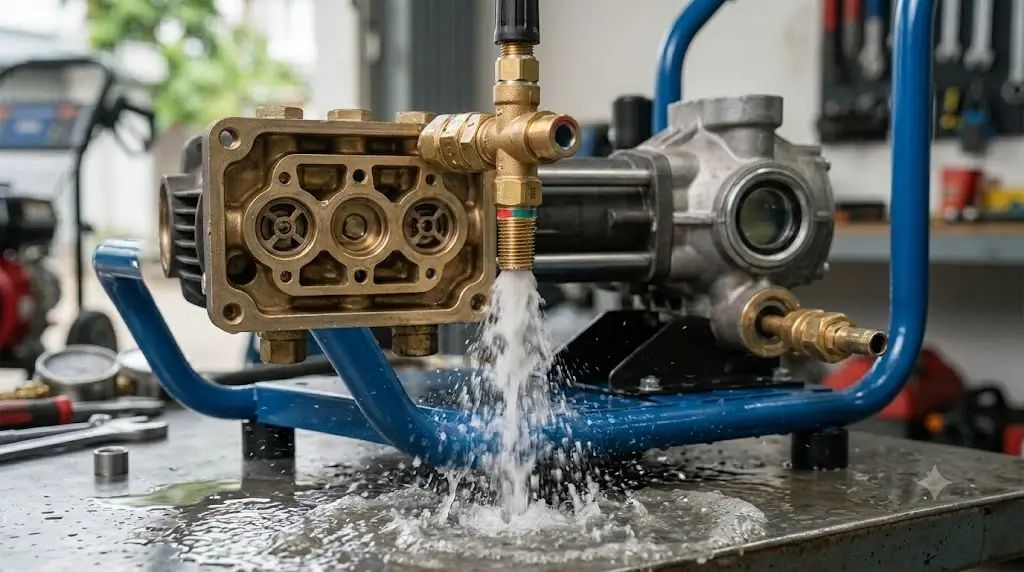
- Leaking Underneath Pump (Running): High-pressure water packings (V-sleeves) are scored by sediment, allowing water past ceramic plungers. If water drips from a small brass barb beneath the manifold, the thermal relief valve has opened to purge overheated bypass water.
- Leaking After Sub-Freezing Weather: Trapped ice expanded inside the manifold casting, resulting in a hairline fracture along the brass or aluminum pump block.
Pressure Washer Water Leak Diagnosis at a Glance
| Leak Point Observed | Operating State | Primary Root Cause | Corrective Resolution |
|---|---|---|---|
| Garden Hose Inlet Swivel | Machine OFF / Faucet ON | Deformed rubber washer or cross-threaded brass garden hose collar | Install heavy-duty EPDM garden hose washer; hand-thread squarely |
| High-Pressure Outlet Barb | Machine Running | Damaged 1/4″ or 3/8″ Buna-N O-ring inside quick-connect collar | Extract damaged O-ring with pick; replace with 90-durometer seal |
| Hose Jacket (Pinhole/Split) | Under Working Pressure | Kinked steel wire braid or thermal exhaust burn from engine muffler | Immediate hose replacement; never attempt hydraulic hose splicing |
| Spray Gun Trigger Seam | Trigger Closed (Bypass) | Failed internal stainless ball valve or cracked internal high-pressure tube | Rebuild internal gun valve core or replace spray gun assembly |
| Thermal Relief Valve Port | Trigger Closed > 90 Sec | Water circulating in bypass heated beyond 140°F (60°C); valve purged safely | Normal safety release; squeeze trigger to introduce cool water |
| Pump Head / Plunger Joint | Machine Running | Worn low-pressure/high-pressure piston packings or cracked ceramic piston | Install complete pump seal packing kit; inspect plungers for scoring |
| Manifold Casting Seam | Any Operating State | Freeze-induced fracture due to lack of seasonal pump protector | Replace complete brass manifold or install new replacement pump |
First: Is the Pressure Washer Safe to Use?
Never treat pressurized water leaks lightly. Water exiting an orifice at 2,000 to 4,000 PSI can penetrate human skin, causing severe hydraulic fluid injection injuries. Review our comprehensive pressure washing safety guide before attempting leak diagnostics.
Stop using the pressure washer immediately if:
- Water sprays in a fine, atomized mist from a high-pressure line pinhole or coupling.
- The outer steel reinforcement wire of the high-pressure hose is severed, frayed, or blistered.
- Water leaks near the motor shroud or GFCI power cord of an electric pressure washer.
- The brass or aluminum pump manifold displays visible hairline casting cracks.
Step-by-Step: How to Pinpoint the Leak Source
Water travels along frame tubing, engine shrouds, and vibration mounts, creating deceptive puddles far from the actual leak. Use this structured isolation process:
- De-energize: Turn off the engine ignition switch or disconnect the electric plug from wall power.
- Shut Supply: Close the outdoor spigot.
- Discharge Backpressure: Squeeze the trigger gun until all static pressure escapes the wand.
- Dry Surfaces: Wipe the pump head, unloader assembly, hose couplings, and lance with a clean microfiber towel.
- Static Pressure Test: Turn the outdoor spigot ON (leave the motor/engine OFF). Inspect the machine. If water drips, the fault lies entirely on the low-pressure supply side (inlet fitting, internal check valves, or intake filter).
- Dynamic Pressure Test: If dry, start the machine, hold the wand trigger open, and inspect connections visually from a safe distance of 3 feet.
Pressure Washer Leaking at the Garden Hose Connection
The garden hose intake operates at household line pressure (40–60 PSI). Leaks here do not mean your high-pressure pump has failed.
Common Causes
- Hardened / Flattened Hose Washer: Standard vinyl garden hose washers compress over time and lose elasticity.
- Cross-Threaded Female Swivel: Forcing brass or plastic fittings onto mismatched aluminum threads damages the pitch.
- Missing / Blocked Filter Screen: If the cone filter screen is tilted or seated off-center, the washer face cannot mate flush.
How to Fix It
Remove the garden hose, extract the old washer with a small pick, and insert a heavy-duty rubber or EPDM hose washer with an integrated stainless mesh filter screen. Thread the collar by hand until snug, then tighten an additional 1/4 turn with pliers if needed.
Pressure Washer Leaking at the High-Pressure Connection & Quick-Connects
Quick-connect couplers (3/8-inch on commercial pumps, 1/4-inch on spray lances) rely on an internal O-ring seated in a precision groove inside the female socket.
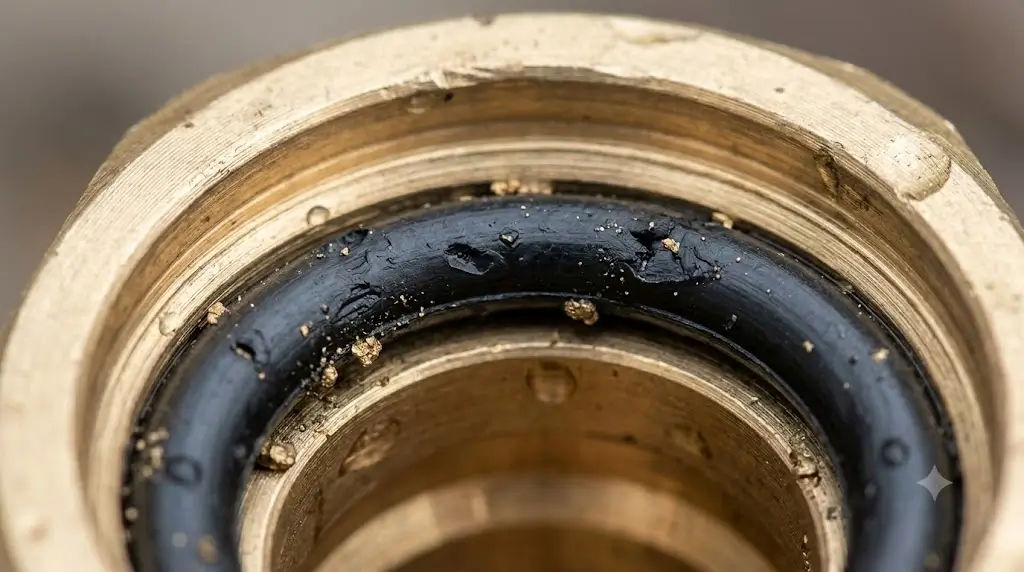
Replacing Quick-Connect O-Rings Correctly
Standard plumbing O-rings from a hardware store will fail within minutes under high pressure. You must use 90-durometer Buna-N (Nitrile) or Viton O-rings designed for hydraulic pressure equipment:
- Retract the brass sliding collar on the female quick-connect fitting.
- Use an angled pick to lift the damaged O-ring from the interior retaining channel.
- Coat the replacement O-ring with 100% pure silicone grease to prevent pinch tearing.
- Seat the new O-ring firmly into the internal groove, ensuring it sits flat without twisting.
Pressure Washer Leaking From the High-Pressure Hose
High-pressure hoses experience constant pressure pulsation, surface abrasion, and heat exposure. If a leak appears along the hose run rather than at the threaded coupling, the structural integrity of the line has failed.
Never patch a high-pressure hose.High-pressure hoses cannot be repaired with hose clamps, heat shrink, vulcanizing tape, or compression splices. Damaged lines will burst under pressure. Replace the entire line with an OEM or wire-braided commercial hose rated to your machine’s maximum PSI.
Pressure Washer Leaking From the Spray Gun or Wand
A leaking spray gun wastes pressure, creates pooling around the operator’s boots, and can indicate internal cracking:
- Weeping From the Trigger Pivot Pin: The internal high-pressure valve stem packing has worn out. Squeezing the trigger forces water past the actuator pin into the plastic housing shell. Replace the internal valve assembly or swap in a new commercial spray gun.
- Leaking at the Wand Extension Joint: The brass M22 threaded coupler or 1/4-inch lance quick-connect is missing its sealing O-ring. Inspect the male plug nose and replace the small internal face seal.
Pressure Washer Leaking From the Pump Manifold
Water escaping directly from the pump assembly points to one of three common issues: packing wear, thermal purge, or manifold freeze fractures.
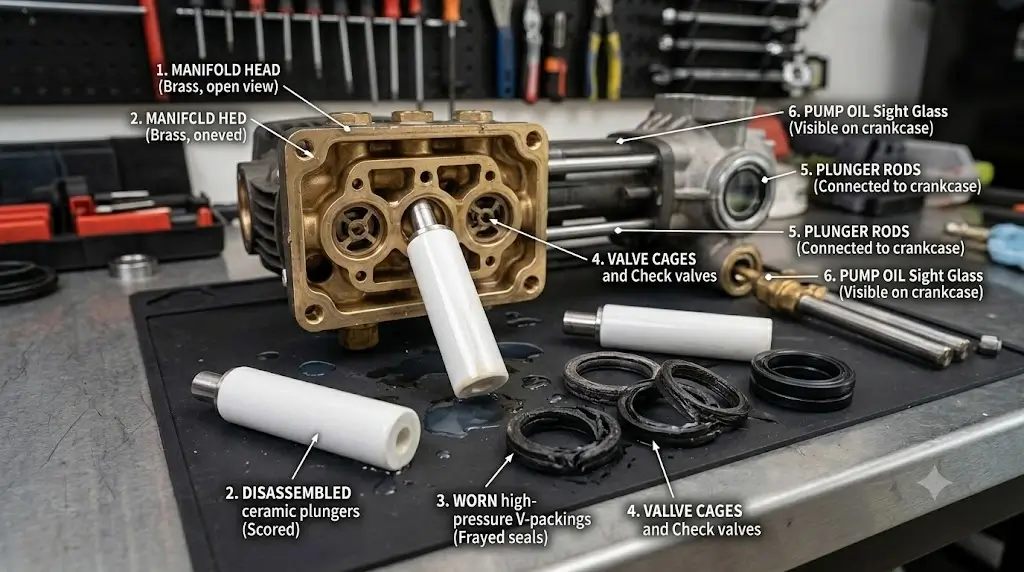
1. High-Pressure Water Packing Failure (V-Seals)
Each pump plunger (piston) passes through a low-pressure seal and a high-pressure V-packing. When fine sediment bypasses a dirty inlet filter, it scores the ceramic piston and shreds the high-pressure seals. Water then sprays or drips from the weep holes located between the pump crankcase and brass manifold head.
Solution: Remove the manifold head bolts, inspect ceramic plungers for fingernail-catching gouges, and replace the complete packing seal kit.
2. Thermal Relief Valve Discharging Water
If clear water steadily drains from a small brass fitting under the pump while the engine is running, your machine may be doing exactly what it was designed to do. When you leave the engine running without pulling the trigger, water recirculates through the pump manifold in bypass mode. Friction heats this closed loop past 140°F (60°C), triggering the thermal relief valve to release hot water and draw in cool supply water.
Solution: Squeeze the spray gun trigger to refresh the pump with cool water. If the valve continues to drip cold water while actively spraying, the internal valve spring has weakened and the thermal relief valve requires replacement.
3. Manifold Freeze Damage
If water leaks along a continuous crack across the brass or aluminum pump head during spring startup, residual water froze inside the pump chambers over winter. Review our complete guide to how to winterize a pressure washer to prevent ice expansion damage with aerosol pump protector.
Pressure Washer Leaking Water From Between Engine and Pump
When water pools at the junction where the pump bolts to the gas engine or electric motor flange, inspect the fluid closely:
- Clear Water: Low-pressure seals have failed, allowing pumped water to escape through the manifold weep holes and run down the mounting flange.
- Milky, White Emulsion: Low-pressure water packings and crankcase oil seals have both failed, forcing pressurized water into the pump oil reservoir. Stop operation immediately to prevent crankcase bearing failure. Check our pressure washer pump oil guide for proper oil change and seal rebuild protocols.
Pressure Washer Leaking When the Trigger Is Released (Unloader Bypass Issues)
Releasing the spray gun trigger forces the pump’s unloader valve to divert 100% of water flow into a closed bypass loop. If water squirts from the unloader valve body or unloader adjustment locknut when the trigger is released, the unloader internal O-rings are blown.
The unloader adjusts bypass pressure spike limits, not base operating pressure. Overtightening the unloader spring can lock the pump into high pressure, causing hose bursts or engine stalling.
Electric Pressure Washer Specific Leak Points
Electric pressure washers—including top models featured in our guide to the best electric pressure washers—rely on lightweight axial wobble-plate pumps often encased in plastic clamshell shrouds.
- Cracked Plastic Inlet / Outlet Barbs: Many entry-level electric machines use plastic water connections. Tripping over or jerking the hose cracks these barbs easily. Replace them with heavy-duty brass aftermarket conversion fittings.
- Internal Total Stop System (TSS) Leaks: Electric units use a pressure microswitch that shuts the motor off when the trigger is closed. If the microswitch housing leaks, water can reach the electrical contacts, tripping your home’s GFCI breaker.
Preventing Pressure Washer Leaks: Proactive Maintenance
Preventative maintenance eliminates the majority of pump leaks before they start. Incorporate these inspection habits into your regular pressure washer maintenance schedule:
Apply pure silicone grease to coupler O-rings monthly to prevent friction tears during nozzle swaps.
Rinse the stainless mesh screen before connecting the garden hose to keep sand from scoring pump packings.
Always squeeze the spray gun trigger after shutting off the engine to relieve stress on internal check valves.
Displace trapped water with non-toxic lubricant before freezing temperatures can fracture pump castings.
Pressure Washer Leak Troubleshooting Flowchart
Step 1: Determine the Machine Operating State
- Leaks with Machine OFF (Spigot ON): Inspect garden hose washer, inlet connector threads, and pump intake housing.
- Leaks Only Under High Pressure: Inspect quick-connect O-rings, hose braiding, spray gun valve stems, and lance fittings.
- Leaks Only When Trigger Is Closed: Check thermal relief valve purge temperature and unloader valve bypass seals.
Step 2: Inspect Fluid Appearance
- Pure Clear Water: Normal water delivery leak; follow the component isolation steps above.
- Milky, Frothy Fluid: Water has breached pump crankcase oil seals; rebuild seals and flush pump oil immediately.
- Soapy, Foamy Water: Chemical siphon barb or downstream detergent ball valve is leaking.
Frequently Asked Questions
Why is my pressure washer leaking water?
Most leaks stem from damaged garden hose washers, torn quick-connect O-rings, punctured high-pressure hoses, thermal relief valves purging overheated water, or worn pump piston packings.
Why is my pressure washer leaking water when it is turned off?
If the spigot is on, static line pressure exposes leaks at the garden hose connection, inlet filter screen, brass swivel collar, or low-pressure pump check-valve seals.
Why does my pressure washer leak only when running?
Certain components seal adequately under low municipal pressure (50 PSI) but fail when the pump generates high pressure (3,000 PSI). This points to worn high-pressure packings, split hose jackets, or leaking lance connections.
Why is water leaking from underneath my pressure washer?
Water often runs down the frame from higher fittings. If the leak originates directly beneath the pump, check the thermal relief valve, the piston packings along the weep holes, or look for freeze cracks across the bottom of the manifold.
Can a bad O-ring cause a pressure washer leak?
Yes. A single missing or nicked O-ring inside a 3/8-inch or 1/4-inch quick-connect socket will cause water to spray out under high pressure. Always use 90-durometer Buna-N or Viton replacement O-rings.
Can I use Teflon tape to stop a pressure washer leak?
Only use Teflon (PTFE) tape on tapered national pipe threads (NPT). Never use Teflon tape on quick-connect fittings, M22 metric swivel nuts, or garden hose connections that seal using internal O-rings or flat rubber washers.
Can I repair a leaking pressure washer hose?
No. High-pressure hoses cannot be safely repaired with clamps, compression fittings, or tape. Structural failure under thousands of PSI poses severe injection injury hazards; replace damaged hoses entirely.
Why is my pressure washer leaking after winter storage?
Residual water left in the pump head expands as it freezes, cracking brass manifold chambers and unseating internal check valves. Injecting pump saver before winter storage prevents freeze damage.
Why does my pressure washer leak when I release the trigger?
Releasing the trigger routes water into the unloader bypass circuit. If water leaks during bypass, either the unloader valve stem O-rings are failing, or the thermal relief valve opened to discharge water heated by prolonged idling.
Is a leaking pressure washer dangerous?
Yes, especially when water leaks from high-pressure lines or reaches electrical components. High-pressure pinhole streams can penetrate skin, while leaks near electric motor housings create electric shock hazards.
Should I keep using a pressure washer that is dripping water?
Minor drips at the low-pressure garden hose inlet are safe to monitor temporarily. However, high-pressure hose leaks, leaking spray gun triggers, and internal pump packing leaks should be resolved immediately to avoid component damage and safety hazards.
Can freezing water damage a pressure washer pump?
Yes. Freezing water expands by roughly 9%, generating extreme hydraulic pressure that can split forged brass manifolds, shear bolts, and shatter ceramic piston plungers.
Why is water dripping from the small brass fitting under my pump?
That fitting is the thermal relief valve. It automatically opens to discharge hot water when the machine idles in bypass mode too long, protecting internal pump packings from melting.
Final Verdict: Identify the Pressure Zone First
Troubleshooting a pressure washer leak comes down to isolating the pressure zone: determine whether the leak occurs in the low-pressure supply circuit (garden hose, inlet filter), the high-pressure delivery system (couplers, hose, trigger gun), or the pump manifold assembly (piston packings, unloader, thermal valve).
Simple O-ring and washer swaps solve the majority of leaks in minutes. For pump-level issues, replace worn packings early to protect ceramic plungers, and always purge line pressure and apply pump protector before off-season storage.
Never patch a high-pressure hose, always use 90-durometer O-rings for quick-connects, and inspect the thermal relief valve before assuming your pump manifold has failed.
