
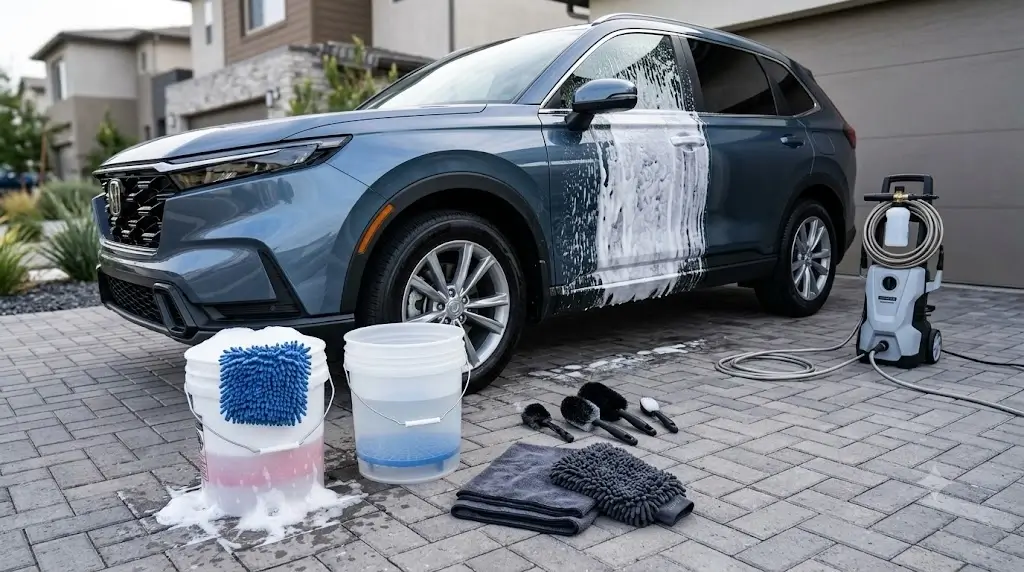
How to Wash a Car at Home: Step-by-Step Guide for a Clean, Scratch-Free Finish
Washing a car correctly is less about using maximum water pressure and more about controlling dirt, lubrication, contact and drying. The biggest avoidable paint-care mistake is dragging abrasive dirt across the paint with a dirty mitt or towel.
This guide explains how to wash a car at home using a garden hose or pressure washer, including the correct washing order, wheel cleaning, pre-rinsing, car soap, microfiber towels, two-bucket washing, drying, pressure-washer technique, common mistakes and situations where a professional detailer is the safer choice.
Step-by-Step
Pressure Washer
Two-Bucket Method
Microfiber
Paint Safety
Quick answer: How do you wash a car at home?
- Park the vehicle in a suitable shaded area and let hot surfaces cool.
- Remove loose dirt with a rinse or pressure washer.
- Clean the wheels and tires separately.
- Wash the car from top to bottom with automotive car soap.
- Use a clean microfiber wash mitt and rinse it frequently.
- Rinse thoroughly so soap does not dry on the paint.
- Dry with clean, soft microfiber drying towels or appropriate air drying.
- Inspect the paint and glass for remaining contamination or water spots.
The key rule: loose dirt should be removed before making repeated contact with the paint.
What You Need to Wash a Car at Home
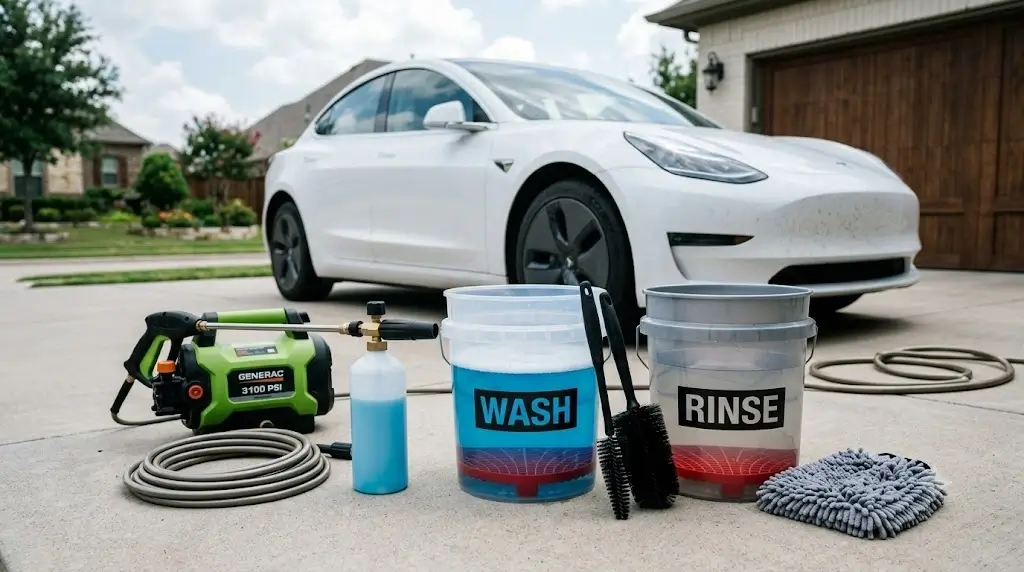
You do not need an expensive detailing setup to wash a car properly. The important thing is having separate tools for the dirtiest areas and preventing abrasive contamination from being transferred back onto painted surfaces. If you are building out your equipment from scratch, reviewing our comprehensive pressure washer buying guide will help you choose machines with appropriate flow rates and manageable operating pressures suitable for clear coat safety.
| Item | Purpose | Priority |
|---|---|---|
| Automotive car shampoo | Provides cleaning and lubrication designed for vehicle surfaces | Essential |
| Microfiber wash mitt | Controlled contact with the paint | Essential |
| Two buckets | Separates wash solution from rinse water | Recommended |
| Hose or pressure washer | Removes loose dirt and rinses the vehicle | Essential |
| Microfiber drying towels | Removes water after washing | Essential |
| Wheel brush | Separately cleans wheels | Recommended |
| Tire brush | Removes tire-sidewall contamination | Recommended |
| Grit guard or bucket insert | Helps keep heavier contamination at the bottom of a bucket | Optional |
What you do not need:You do not need maximum PSI, an oversized foam cannon, aggressive chemicals or a large collection of detailing accessories to safely wash a normal passenger vehicle.
Where to Wash Your Car
Choose a location where you can control sunlight, runoff, traffic and access to water.
A shaded area is generally preferable because direct sun can heat the body panels and cause water or soap to dry before you finish rinsing.
Ideal Conditions
- Shade or indirect sunlight
- Moderate temperature
- Low wind
- Stable footing
- Reliable water supply
- Enough space to walk around the vehicle
- Safe drainage
Check local rules before washing a car in a driveway.Some municipalities, HOAs or water districts may restrict residential vehicle washing or regulate wastewater discharge. Local rules vary across the United States.
Before You Start: Let the Car Cool
Touch the hood, roof and other major panels before applying soap. If the paint is extremely hot, wait for it to cool.
The problem with washing a very hot car is not that water automatically damages paint. The practical issue is that water and detergent evaporate faster, making it harder to rinse cleanly and increasing the chance of mineral deposits or soap residue drying on the surface.
Remove These Items Before Washing
- Loose objects from the roof or trunk
- Personal items that could get wet
- Aftermarket accessories that require special care
- Anything that could interfere with hoses or movement around the vehicle
Can You Use a Pressure Washer to Wash a Car?
Yes. A pressure washer can be useful for removing loose dirt before contact washing, but more pressure is not automatically better for automotive paint. In fact, many detailing enthusiasts select from the best electric pressure washers because their predictable output in the 1,200 to 1,900 PSI range provides optimal cleaning energy without risking clear-coat abrasion or lifting factory window seals.
The main advantage of a pressure washer is reducing the amount of loose contamination that must be physically wiped across the paint.
A pressure washer should be viewed as a pre-rinse and rinse tool, not as a substitute for controlled contact washing.
Best approach:Pressure washer or hose → remove loose contamination → lubricated hand wash → thorough rinse → careful drying.
Pressure Washer Settings for Cars
Pressure washer specifications vary widely, and advertised maximum PSI is not the same thing as the pressure delivered at the surface during every use.
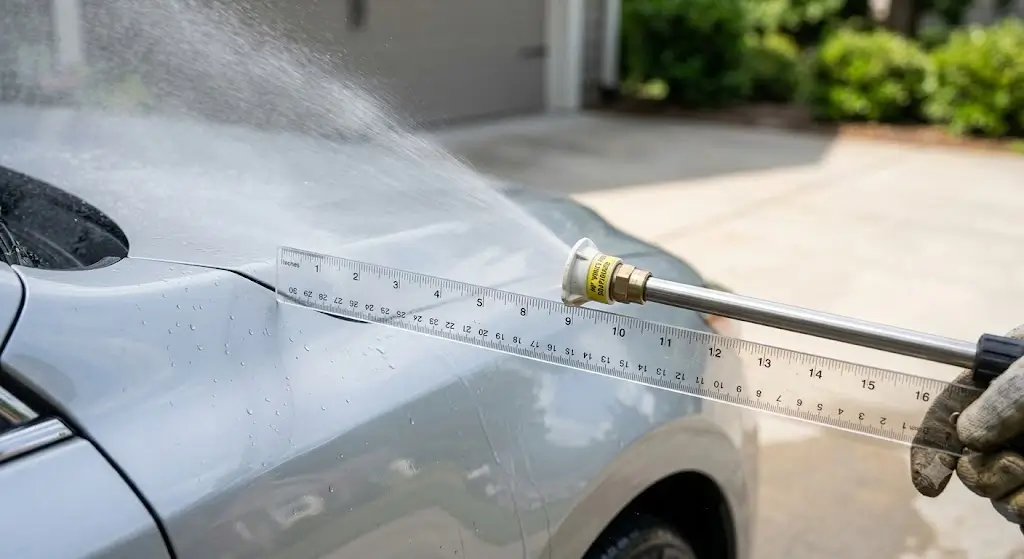
For automotive cleaning, the important variables are the actual spray pressure, nozzle pattern, distance, flow rate, angle and surface condition.
| Factor | Why It Matters |
|---|---|
| Pressure | Higher pressure increases the mechanical force delivered to the surface. |
| Flow rate | More water can improve rinsing and debris removal. |
| Nozzle pattern | Wider patterns distribute force over a larger area. |
| Distance | Moving closer generally increases the intensity at the surface. |
| Spray angle | Angle changes how water interacts with the surface and edges. |
| Surface condition | Damaged paint, loose trim and failed seals require more caution. |
Never use a pressure washer to compensate for poor washing technique.If dirt is bonded to the surface, identify the type of contamination rather than simply increasing pressure.
Step 1: Clean the Wheels and Tires First
Wheels and tires are usually among the dirtiest areas of the vehicle. Brake dust, road film, mud and tire residue can contaminate your wash tools.
Clean them before the painted body panels so that the dirtiest tools are not used on the paint afterward.
Wheel-Washing Sequence
- Rinse the wheel and tire.
- Apply an appropriate wheel cleaner if necessary.
- Agitate with dedicated wheel brushes.
- Clean the tire sidewall separately.
- Rinse thoroughly.
- Move to the next wheel.
Use wheel chemicals according to the wheel manufacturer’s finish and the cleaner’s instructions.Uncoated aluminum, polished surfaces, painted wheels and specialty finishes may have different chemical compatibility requirements.
Step 2: Rinse the Car Before Touching the Paint
The first rinse should remove as much loose dirt as practical before the wash mitt touches the paint.
Start at the top and work downward so that runoff carries contamination toward areas that have not yet been cleaned. Whenever dealing with pressurized water around outdoor extension cords, observe the essential rules in our pressure washing safety guide to ensure GFCI immersion safety and prevent accidental slips on wet concrete driveway surfaces.
What the Pre-Rinse Does
- Removes loose dust
- Softens dried road film
- Removes loose sand and grit
- Reduces contamination transferred by the wash mitt
- Prepares the surface for detergent
A pressure washer can make this stage more effective, but a normal hose can still perform the basic function.
Step 3: Prepare Car Wash Soap
Use an automotive shampoo according to its dilution instructions. Choosing the best pressure washer soap formulated specifically for vehicles ensures thick foam clinging power without stripping off existing wax layers or drying out protective rubber seals.
Do not assume that a stronger concentration is automatically safer or more effective. The formulation is designed around a specified dilution range.
Why Automotive Soap?
Vehicle shampoos are formulated for painted automotive surfaces and are generally intended to provide cleaning while maintaining useful lubrication during contact washing.
Household dish detergents are not the preferred choice for routine automotive washing because the formulation and intended use are different from dedicated car shampoos.
Step 4: Wash the Car From Top to Bottom
The top-to-bottom method is one of the most important principles in car washing.
Upper surfaces generally accumulate less heavy road contamination than the lower portions of the vehicle. Washing the cleaner areas first helps keep the wash mitt cleaner.
Recommended Order
- Roof
- Upper windows
- Upper hood
- Upper trunk
- Upper doors
- Lower doors
- Front and rear lower areas
Simple rule:Cleanest surfaces first. Dirtiest surfaces last.
Step 5: Wash Each Panel Systematically
Work in manageable sections rather than covering the entire vehicle with soap and then trying to remember where you have already washed.
For Each Section
- Load the mitt with lubricated wash solution.
- Use light, controlled passes.
- Avoid pressing aggressively against the paint.
- Rinse the mitt frequently.
- Reload with fresh soap.
- Move to the next section.
The objective is not to scrub harder. The objective is to allow lubrication and controlled contact to loosen contamination while minimizing unnecessary friction.
Step 6: Treat Lower Panels as a Separate Dirt Zone
Rockers, lower doors, bumpers and the area behind the wheels commonly accumulate heavier road grime.
These areas should be cleaned after the upper body.
If the wash mitt becomes heavily contaminated, rinse it thoroughly or switch to a dedicated mitt rather than continuing to drag heavy grit across painted panels.
Detailing principle:The lower third of the vehicle often deserves its own wash media because it is exposed to more road contamination than the roof and upper body.
Step 7: Rinse the Car Thoroughly
After contact washing, rinse the entire vehicle.
Make sure soap is removed from panel gaps, mirrors, trim, emblems, wheels and other areas where detergent can remain trapped.
Rinse in Sections
A controlled rinse is easier to manage than spraying randomly across the vehicle. Work from the upper surfaces toward the lower sections.
If the weather is hot or windy, do not allow detergent to dry on the surface.
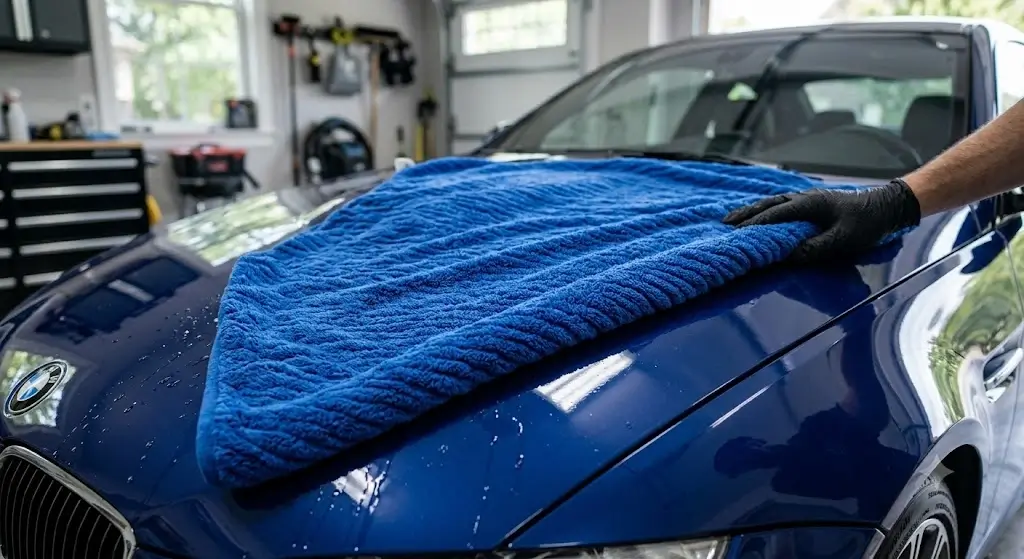
Step 8: Dry the Car Without Creating New Scratches
Drying is another contact stage, so the same contamination-control principle applies.
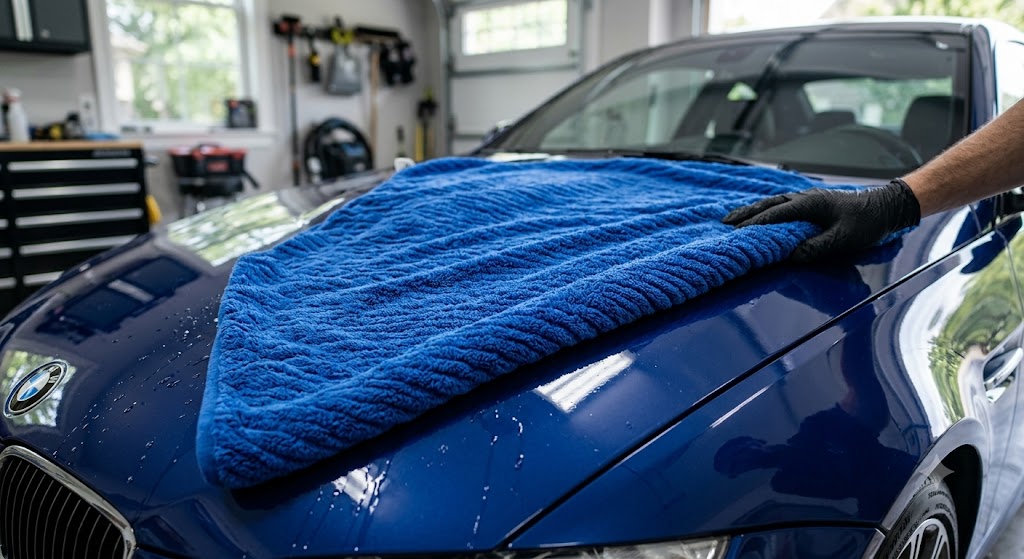
Use clean, dedicated microfiber drying towels rather than an old household towel.
Good Drying Practices
- Use clean microfiber drying towels.
- Use separate towels for wheels and paint.
- Do not drop a towel onto the ground and continue using it.
- Do not use a towel heavily contaminated with dirt.
- Dry around mirrors, emblems and trim where water collects.
- Use an appropriate drying aid if the product is designed for the paint system.
How to Clean Car Glass
Glass should be cleaned with a suitable automotive glass cleaner and a clean microfiber towel.
Do not use the same heavily contaminated towel used on wheels or lower body panels.
For Exterior Glass
- Rinse away loose contamination first.
- Wash with the vehicle.
- Rinse thoroughly.
- Dry with a dedicated glass towel.
- Inspect under different angles for remaining streaks.
Windshield visibility is a safety issue, so avoid leaving detergent residue or oily film on the glass.
How to Clean Tires
Tire sidewalls accumulate road film, brake dust and other contamination.
Use a dedicated tire brush and cleaner appropriate for the tire material and manufacturer’s recommendations.
After cleaning, rinse thoroughly.
If you apply a tire dressing, follow the product’s instructions and avoid allowing excess product to migrate onto the tread or brake components.
How to Remove Bugs From a Car
Dried insects can become difficult to remove if they are allowed to remain on the paint for long periods.
Start with water and appropriate car shampoo rather than immediately using aggressive scrubbing.
Safer Approach
- Pre-rinse the affected area.
- Allow appropriate cleaner or shampoo to dwell according to its instructions.
- Gently agitate if necessary.
- Rinse.
- Repeat rather than increasing pressure aggressively.
How to Remove Bird Droppings Safely
Bird droppings should not be allowed to remain on automotive paint unnecessarily.
Avoid dry scrubbing. Soften and lubricate the contamination first.
A clean microfiber towel and suitable automotive cleaner can reduce the amount of friction required to remove the material.
How to Deal With Tree Sap
Tree sap can resist ordinary shampoo.
Do not attack hardened sap with aggressive scraping tools. Use a product specifically designed for automotive-safe removal and follow its directions.
After chemical removal, wash and rinse the affected area.
How to Prevent Water Spots
Water spots form when water evaporates and leaves dissolved minerals or other residues behind.
The easiest prevention strategy is to avoid allowing water to dry naturally on a hot vehicle when the water supply is mineral-rich.
Reduce Water-Spot Risk
- Wash in shade.
- Avoid extremely hot panels.
- Rinse thoroughly.
- Dry promptly.
- Use clean drying towels.
- Consider appropriate filtered water if your local water is particularly mineral-rich.
How to Reduce Swirl Marks and Scratches
Most DIY car-washing damage comes from unnecessary abrasive contact rather than from ordinary water itself.
The goal is to reduce the number of times dirt is dragged across the paint.
The Five Biggest Controls
- Pre-rinse: remove loose contamination before contact.
- Lubrication: use properly diluted car shampoo.
- Clean wash media: rinse the mitt frequently.
- Separate dirty areas: use dedicated tools for wheels and heavily contaminated sections.
- Clean drying towels: never dry paint with contaminated fabric.
Information Gain:A “scratch-free wash” does not depend on one special towel or one magic soap. It depends on reducing abrasive particle + pressure + movement across the paint.
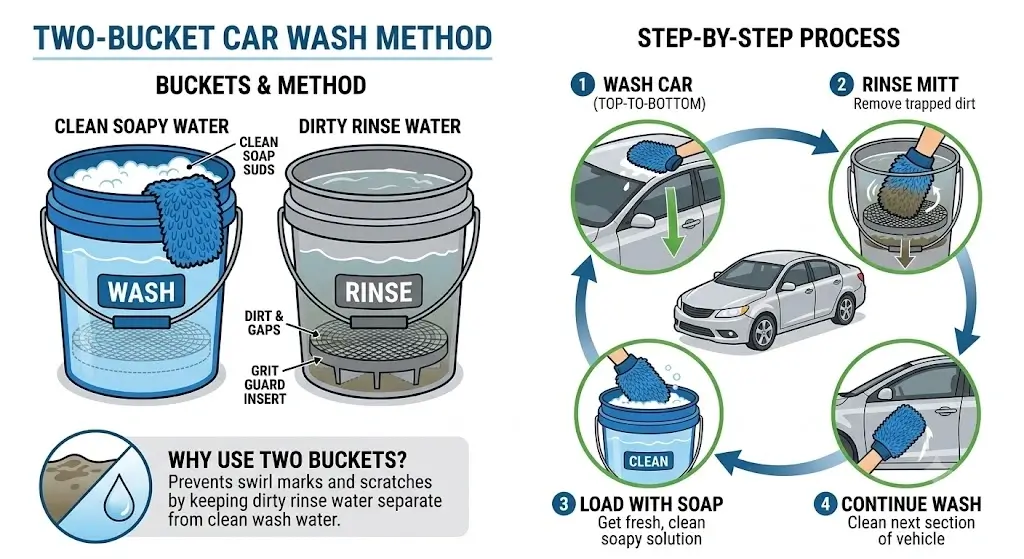
Two-Bucket Car Washing Explained
The two-bucket method uses one bucket for wash solution and another for rinsing the wash mitt.
| Bucket | Purpose |
|---|---|
| Wash bucket | Contains properly diluted car shampoo |
| Rinse bucket | Used to remove contamination from the mitt before reloading soap |
The advantage is process control: the wash solution is not the only place where the mitt can be rinsed.
A grit guard or similar bucket insert can help keep heavier contamination lower in the bucket, but it does not replace frequent rinsing and clean wash media.
Should You Use a Foam Cannon?
A foam cannon can apply a layer of cleaning solution before contact washing. Upgrading your lance with tested hardware from our accessories & foam cannons hub helps match the internal orifice size (1.1mm vs. 1.25mm) directly to your machine’s GPM output for shaving-cream-thick foam dwell time.
Its main potential benefit is helping loosen and encapsulate some surface contamination before the wash mitt is introduced.
However, foam alone does not guarantee a scratch-free wash. Stubborn contamination often still requires controlled contact.
Foam Cannon Workflow
- Pre-rinse the vehicle.
- Apply appropriate foam.
- Allow the product to dwell according to its instructions.
- Rinse thoroughly.
- Perform the contact wash.
- Final rinse.
- Dry.
Do not confuse foam volume with cleaning power.A thick-looking layer of foam does not automatically mean that more dirt has been removed.
What Car Soap Should You Use?
Choose a shampoo designed for automotive exterior surfaces and follow the manufacturer’s dilution instructions.
For Routine Washing
A pH-balanced automotive shampoo is a practical default for routine maintenance washing.
For Coated Vehicles
Use products compatible with the coating manufacturer’s maintenance recommendations.
For Heavily Contaminated Vehicles
A dedicated pre-wash or appropriate cleaning chemical may reduce the amount of mechanical contact required.
The correct product depends on the contamination, surface and existing protection.
Choosing Microfiber Towels for Car Washing
Microfiber towels vary in weave, thickness, pile and intended use.
You do not need one towel for every task, but you should separate towels by contamination level.
| Task | Recommended Approach |
|---|---|
| Paint drying | Clean, soft dedicated drying towel |
| Glass | Dedicated glass towel |
| Wheels | Separate towel or dedicated wheel media |
| Tires | Dedicated tire towel if needed |
| Interior | Keep separate from exterior paint towels |
Never use a microfiber towel on paint after it has contacted the ground.A tiny amount of abrasive grit can be enough to create visible defects when rubbed against automotive paint.
15 Car-Washing Mistakes to Avoid
- Washing a hot vehicle in direct sunlight.
- Using household dish soap as the default car shampoo.
- Using the same sponge on wheels and paint.
- Skipping the pre-rinse.
- Using a dirty wash mitt.
- Scrubbing hard when contamination does not release.
- Using excessive pressure instead of better technique.
- Allowing soap to dry on the paint.
- Allowing mineral-rich water to dry on the vehicle.
- Using dirty drying towels.
- Dropping a microfiber towel and continuing to use it.
- Using aggressive chemicals without checking compatibility.
- Spraying directly into vulnerable openings.
- Ignoring damaged trim or seals.
- Forgetting to clean the wheels separately.
How Often Should You Wash a Car?
There is no universal number of washes that applies to every vehicle.
Washing frequency should reflect climate, road conditions, parking environment, vehicle use and contamination.
| Driving Environment | Practical Approach |
|---|---|
| Mostly clean suburban roads | Routine maintenance washing as needed |
| Heavy highway driving | More frequent washing because of road film and debris |
| Winter road salt | Frequent rinsing/washing when conditions permit |
| Coastal environment | Regular removal of salt-containing contamination |
| Tree-covered parking | Prompt removal of sap and organic contamination |
| Frequent off-road use | Wash based on mud, grit and contamination level |
How to Wash a Car in Winter
Winter washing presents a different set of problems: road salt, freezing temperatures, wet surfaces and water trapped in doors or seals.
Removing road salt and grime can be more important than waiting for a perfect warm day.
Winter Tips
- Choose a suitable day when temperatures allow.
- Rinse road salt from the lower body and wheel areas.
- Dry door edges and seals when practical.
- Open and close doors carefully if freezing is possible.
- Do not allow wet equipment to freeze in ways that can damage it.
How to Wash a Car in Hot Weather
Hot weather increases evaporation, so water and soap can dry quickly.
The solution is process control rather than stronger chemicals.
- Work in shade.
- Wash smaller sections.
- Keep the surface wet.
- Rinse before detergent dries.
- Dry promptly.
How to Wash a Ceramic-Coated Car
Ceramic coatings change the surface properties of the paint but do not eliminate the need for careful washing.
A coated vehicle can still develop contamination and scratches if dirty wash media is dragged across it.
Recommended Approach
- Use a compatible maintenance shampoo.
- Pre-rinse thoroughly.
- Use clean wash media.
- Minimize unnecessary friction.
- Rinse completely.
- Dry using clean microfiber or an appropriate air-drying method.
Follow the coating manufacturer’s maintenance instructions when they differ from general car-care practices.
How to Wash a Waxed Car
A waxed vehicle should still be washed using the same contamination-control principles.
Avoid aggressive chemicals unless you specifically intend to remove or replace the existing protection.
Routine maintenance washing should focus on removing contamination while minimizing unnecessary mechanical abrasion.
How to Wash Matte Paint
Matte and satin finishes require special care because polishing or aggressive mechanical correction can permanently alter the appearance.
Use cleaning products approved for matte finishes and follow the vehicle manufacturer’s recommendations.
How to Wash a Black Car Without Swirl Marks
Black paint does not necessarily scratch more easily than every other color, but defects are usually easier to see because contrast makes fine marks more obvious.
The best strategy is the same: reduce abrasive contact.
Black-Car Priority List
- Strong pre-rinse.
- Clean microfiber mitt.
- High-quality automotive shampoo.
- Frequent mitt rinsing.
- Separate wheel tools.
- Clean drying towels.
- Prompt drying.
How to Wash an Electric Vehicle
Modern EVs are designed to operate in wet outdoor conditions, but washing still requires reasonable care.
Follow the vehicle manufacturer’s exterior-cleaning instructions.
- Do not direct concentrated spray into vulnerable openings.
- Do not modify or remove charging equipment to facilitate washing.
- Keep electrical connectors and charging equipment clean and appropriately dry.
- Follow manufacturer instructions for charging-port care.
The fact that a vehicle is electric does not mean it should be treated like exposed electrical equipment, but it also does not eliminate the need for sensible water-management practices.
How Much Does It Cost to Wash a Car at Home?
Once you own basic equipment, the ongoing cost of a home car wash can be relatively low. For mobile detailers or property owners without outdoor wall outlets, cordless battery pressure washers eliminate extension cords completely. In our hands-on EGO pressure washer review, we tested how high-voltage 56V lithium battery systems deliver consistent car-washing pressure without dragging power cords through driveway rinse runoff.
| Expense | Typical Role |
|---|---|
| Car shampoo | Recurring consumable |
| Water | Depends on local utility pricing and washing method |
| Microfiber towels | Replace as they wear or become unsuitable |
| Wheel cleaner | Optional depending on contamination |
| Pressure washer | Upfront equipment cost |
| Foam cannon | Optional equipment |
A pressure washer is not required for a good car wash. For many homeowners, a hose, quality shampoo, clean mitt and good drying towels are sufficient.
When to Use a Professional Car Detailer
DIY washing is appropriate for routine maintenance, but some jobs involve contamination or surface conditions that require specialized tools and experience.
Consider Professional Detailing When:
- Paint has significant embedded contamination.
- There are severe water spots.
- Tree sap has hardened extensively.
- Paint requires machine polishing.
- There are deep scratches.
- The vehicle has a specialty finish.
- You are unsure how to safely remove a particular contaminant.
- The vehicle requires paint correction or coating installation.
A professional detailer can also inspect the paint and determine whether a problem requires washing, chemical decontamination, clay treatment, polishing or another process.
Complete Car Wash Checklist
Before Washing
- Check local water/runoff rules.
- Park in shade when possible.
- Allow hot surfaces to cool.
- Prepare clean wash media.
- Prepare separate wheel tools.
- Prepare drying towels.
- Check hose or pressure washer.
Wash
- Clean wheels first.
- Pre-rinse the vehicle.
- Prepare automotive shampoo.
- Wash from top to bottom.
- Rinse the mitt frequently.
- Keep dirty lower areas separate.
- Do not let soap dry.
After Washing
- Final-rinse thoroughly.
- Dry with clean microfiber towels.
- Dry mirrors, trim and panel gaps.
- Clean exterior glass.
- Inspect paint under good lighting.
- Store wash equipment clean.
Frequently Asked Questions
What is the best way to wash a car at home?
The safest general method is to pre-rinse the vehicle, clean the wheels separately, use automotive car shampoo and a clean microfiber mitt, wash from top to bottom, rinse thoroughly and dry with clean microfiber towels.
Can I wash my car with a pressure washer?
Yes. A pressure washer is useful for pre-rinsing and final rinsing, but use appropriate equipment, spray patterns, distance and technique. Maximum PSI should not be treated as the target for automotive paint.
What PSI should I use to wash a car?
There is no single PSI number that is correct for every vehicle or pressure washer. Surface distance, nozzle pattern, flow and actual pressure at the vehicle matter. For automotive washing, controlled spray and appropriate distance are more important than chasing maximum pressure.
Should I pressure wash a car before washing it by hand?
Yes, a pre-rinse can remove loose dirt and reduce the amount of contamination that must be moved across the paint during contact washing.
Should I wash wheels before the car?
Yes. Wheels and tires commonly contain heavier contamination, so cleaning them first reduces the chance of transferring brake dust and road grime onto painted surfaces.
Should I use two buckets to wash my car?
The two-bucket method is a useful way to separate wash solution from rinse water and reduce contamination carried back onto the vehicle.
Can I use dish soap to wash my car?
Automotive car shampoo is the better choice for routine washing because it is specifically formulated for vehicle surfaces and washing conditions.
What is the best soap for washing a car?
A quality automotive shampoo that matches your vehicle’s finish and protection system is a good default. Follow the manufacturer’s dilution instructions rather than assuming more soap is better.
How do I wash a car without scratching it?
Remove loose dirt before contact washing, use lubricated automotive shampoo, keep wash media clean, separate wheel tools from paint tools and dry with clean microfiber towels.
Should I wash my car in the sun?
Shade is generally preferable because direct sunlight can heat the surface and cause water or detergent to dry before you finish the wash.
How do I wash a black car?
Use the same contamination-control process as any other vehicle, with particular attention to clean wash media and drying towels because fine surface defects are often more visible on black paint.
How do I dry my car after washing?
Use clean, dedicated microfiber drying towels or an appropriate air-drying method. Avoid contaminated towels and do not allow dirty fabric to drag across the paint.
How do I prevent water spots when washing my car?
Wash in shade, avoid letting water dry on hot paint, rinse thoroughly and dry promptly. Mineral-rich water can leave deposits after evaporation.
Can I wash a ceramic-coated car normally?
Yes, but use products compatible with the coating manufacturer’s maintenance recommendations and continue using careful pre-rinsing and clean wash media.
Can I pressure wash car windows?
Pressure washing glass requires appropriate distance and spray control. Avoid concentrated spray against damaged glass, seals, trim or vulnerable areas.
How often should I wash my car?
Wash frequency depends on driving conditions, climate, road salt, coastal exposure, parking environment and contamination. Vehicles exposed to heavier contamination generally benefit from more frequent cleaning.
Is washing a car at home cheaper than a car wash?
Once you own the basic equipment, home washing can have a relatively low ongoing consumable cost. However, water, equipment, chemicals and local wastewater rules affect the total cost.
What should I do if bird droppings are stuck to my car?
Soften and lubricate the contamination before removal. Avoid dry scrubbing because unnecessary friction can increase the chance of surface damage.
What should I do if tree sap is stuck to my car?
Use an automotive-safe sap-removal product according to its instructions rather than scraping aggressively. Wash and rinse the area afterward.
Do I need a foam cannon to wash a car?
No. A foam cannon is optional. A properly diluted car shampoo, clean wash mitt, water supply and controlled technique are enough for routine washing.
What is the biggest mistake when washing a car?
One of the biggest mistakes is repeatedly dragging contaminated wash media across the paint. Pre-rinsing, frequent rinsing of the mitt and separating dirty areas help reduce this risk.
Bottom Line: The Best Car Wash Is a Controlled Car Wash
A good home car wash does not require the most powerful pressure washer or the largest collection of detailing products. The critical part is controlling contamination before and during contact with the paint.
Rinse first, clean the wheels separately, wash from top to bottom, use automotive shampoo, keep the mitt clean, rinse thoroughly and dry with clean microfiber.
For pressure-washer users, remember that the machine’s maximum PSI is not the goal. The goal is effective cleaning with controlled mechanical force and minimal unnecessary contact.
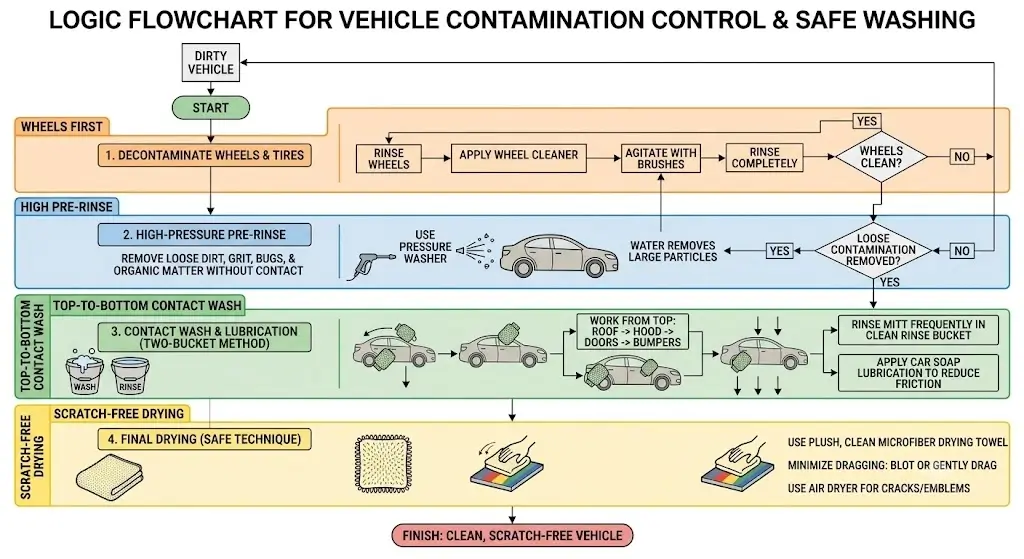
HomeGearMax Car-Washing Rule:Remove dirt before you rub it.
That single principle explains why pre-rinsing, proper lubrication, clean wash media and careful drying matter more than simply increasing pressure.
