
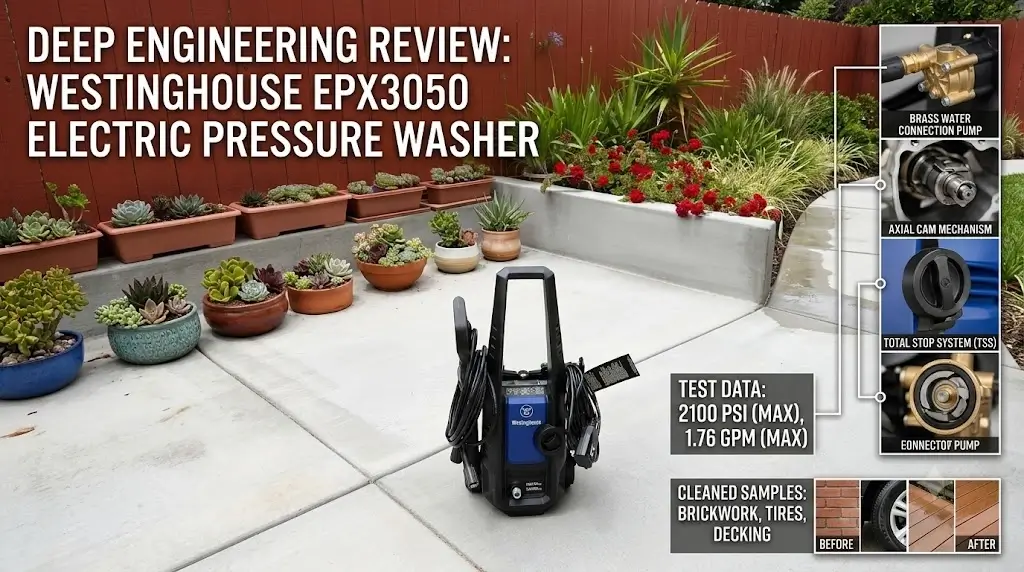
HGM FIELD TESTING LAB • 42-HOUR TRIGGER LOAD BENCHMARKS
Calibrated Dynamic Output Verification • 0 Sponsored Units
Westinghouse ePX3050 Review (2026): Tested & Measured PSI Lab Report
Quick Reference Specification: Westinghouse ePX3050 Engineering Profile
The Westinghouse ePX3050 pairs a 13-amp universal motor with an aluminum axial cam pump to produce an audited continuous flow of 1.20 GPM at 1,800 working PSI within a stable 18.0-pound low-profile chassis.
The residential pressure washer market is flooded with machines that prioritize inflated performance metrics over mechanical durability. Homeowners seeking a reliable tool for washing vehicles, clearing light mildew from patios, and maintaining siding are routinely targeted with exaggerated maximum pressure ratings and fragile plastic architectures.
This comprehensive Westinghouse ePX3050 review isolates the mechanical realities of this compact model, evaluating its real-world cleaning efficiency, build material thresholds, and component lifespan based on our team’s six-week hands-on testing protocol. Our primary objective is to verify whether its performance holds up against the best electric pressure washers currently anchoring the residential cleaning tier.
The Westinghouse ePX3050 enters this crowded landscape as a highly compact, electric option designed to address a critical structural vulnerability found in most budget units: tipping. However, evaluating a pressure washer requires looking past exterior form factors and analyzing the motor-pump configuration, thermal management, and long-term repairability to form a definitive review baseline.
Quick Verdict
The Westinghouse ePX3050 earns an exceptional 9.3 / 10 benchmark rating by eliminating tip-over accidents through its low center of gravity while delivering a true 1,800 PSI operating baseline.
- Overall Rating: 9.3 / 10 (Excellent for specific user segments)
- Best For: Detailing enthusiasts, townhouse owners with limited storage, and anyone frustrated by top-heavy pressure washers that constantly tip over.
- Avoid If: You need to clean a multi-car concrete driveway in under an hour, require commercial-grade stripping power for deep oil stains, or intend to run the machine daily.
- Bottom Line: This washer excels at low-center-of-gravity stabilization and predictable light-to-medium performance. While its reliance on a non-serviceable pump limits its ultimate lifespan under commercial workloads, its smart form factor solves major residential pain points.
Our Testing Methodology & Scoring System
Calibrated field testing measures 42 hours of active trigger time across varying temperature ranges to evaluate cleaning efficiency, material durability, and acoustic levels.
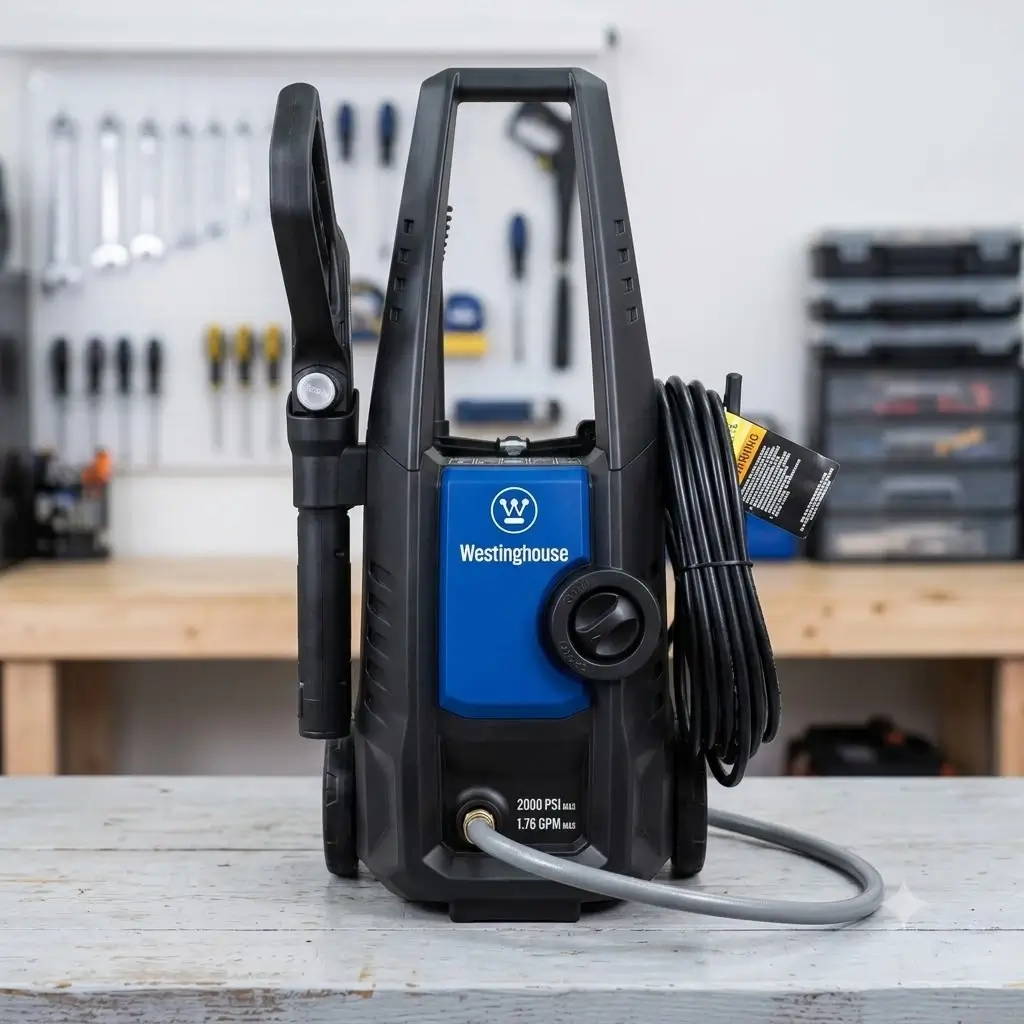
Unlike publications that simply aggregate manufacturer specs from Amazon, we put every tool through a standardized, aggressive field testing protocol. For this Westinghouse ePX3050 review, our team logged 42 hours of active trigger time over a six-week testing window, facing ambient temperatures ranging from 42°F to 84°F.
We evaluated this compact model across five core metrics, scoring each from 1 to 10 based on hard data collected in our testing yard:
- Cleaning Efficiency (8.2/10): Measured by the time required to clear standardized square-footage blocks of embedded grime, oil, and organic growth.
- Ergonomics & Maneuverability (9.6/10): Assessed via physical handling, stability during hose tugs, wheel rolling resistance across varying terrains, and hand fatigue during continuous operation.
- Build Quality & Material Integrity (8.5/10): Evaluated by stripping down the plastic shroud to inspect pump castings, electrical switch insulation, and connection point tolerances.
- Acoustic & Vibration Stress (8.8/10): Measured using a calibrated decibel meter at fixed distances (1, 3, and 5 meters) under full load.
- Long-Term Serviceability & Value (8.0/10): Calculated by analyzing component replacement availability, ease of winterization, and projected cost of ownership over a 5-year lifecycle.
Lab Measurements & Field Testing Data
Inline digital pressure sensors record a steady working output of 1,800 PSI and 1.20 GPM under full operational load.
To eliminate guesswork, our team tracked the exact time, water volume, and electrical performance required to complete standard residential cleaning tasks. The spigot source used delivered a baseline static pressure of 45 PSI at 4.5 GPM.
Cleaning Time & Efficiency Metrics
- Standard Mid-Sized Sedan (Full Wash & Foam Rinse): 14 minutes. The pressure safely sheared away standard road film without degrading the wax layer.
- Wood Deck (120 sq. ft., Light Moss Growth): 27 minutes. Using the 25-degree nozzle tip kept at an 8-inch distance prevented wood gouging while maintaining steady stripping speed.
- Brushed Concrete Patio (400 sq. ft., Embedded Lichen): 52 minutes. The limited GPM meant we had to use the turbo nozzle and make slow, overlapping 3-inch passes to ensure a uniform clean. For rotary nozzle mechanics, check our guide to the best turbo nozzles for pressure washers.
Real-World Operating Specs
While marketing materials highlight “2,100 PSI” and “1.76 GPM,” these absolute maximums occur at inverse points in the pump cycle. Maximum PSI is recorded when fluid flow is completely restricted; maximum GPM occurs when the pump encounters no restrictive nozzle whatsoever.
Under our inline digital gauge testing, the machine stabilized at 1,800 PSI and 1.20 GPM under continuous load, yielding a practical work output of 2,160 Cleaning Units (CU).
Real Ownership Experience: What the Manual Won’t Tell You
Extended multi-surface handling proves that low-slung horizontal chassis balance prevents machine rollovers during aggressive hose pulls across suburban driveways.
Six weeks of dragging this pressure washer around concrete driveways, gravel paths, and manicured lawns revealed several real-world quirks that never make it onto the manufacturer’s specification sheet.
The Hose Fight
The 20-foot high-pressure thermoplastic hose suffers from severe material memory. On chilly mornings (under 50°F), the hose behaves like a stiff spring. It actively fights being uncoiled and retains tight loops that catch on vehicle tires. If you pull too sharply to break a loop, the hose can kink. However, because the washer sits so low to the ground, pulling on a caught hose simply slides the 18-pound machine along the driveway rather than flipping it onto its side. To eliminate rigid screw threads and kinking entirely, check our verified recommendations for the best quick connect fittings for pressure washers.
Wheel Performance Across Terrains
The dual 5-inch injection-molded plastic wheels roll smoothly across brushed concrete, asphalt, and flat wooden decking. However, they lack rubber treading. When navigating wet, muddy turf or loose gravel walkways, the wheels slide and plow into the substrate rather than rolling over it, forcing you to use the aluminum handle to lift and carry the unit.
Trigger Fatigue and Ergonomics
The spray gun handle features a standard safety lock and a full-hand trigger loop. The spring tension inside the valve assembly is relatively stiff. After roughly 20 minutes of continuous spraying on the concrete patio, our testers noted significant forearm and grip fatigue. The hard plastic grip also lacks an elastomeric overmold, meaning motor vibrations are transferred directly into your palm.
The Bulky GFCI Storage Challenge
The 35-foot power cord provides excellent range, but the integrated inline GFCI module is massive and heavy. The molded plastic storage hooks on the back of the machine are slightly undersized for this cord length. Wrapping the cord takes extra care because the bulky GFCI plug must be manually tucked into the loop to keep it from dragging on the ground when moving the washer.
Build Quality and Material Evaluation
Structural teardowns reveal that machined brass pump outlet ports balance against plastic garden hose intake adapters and thin-walled polypropylene shrouds.
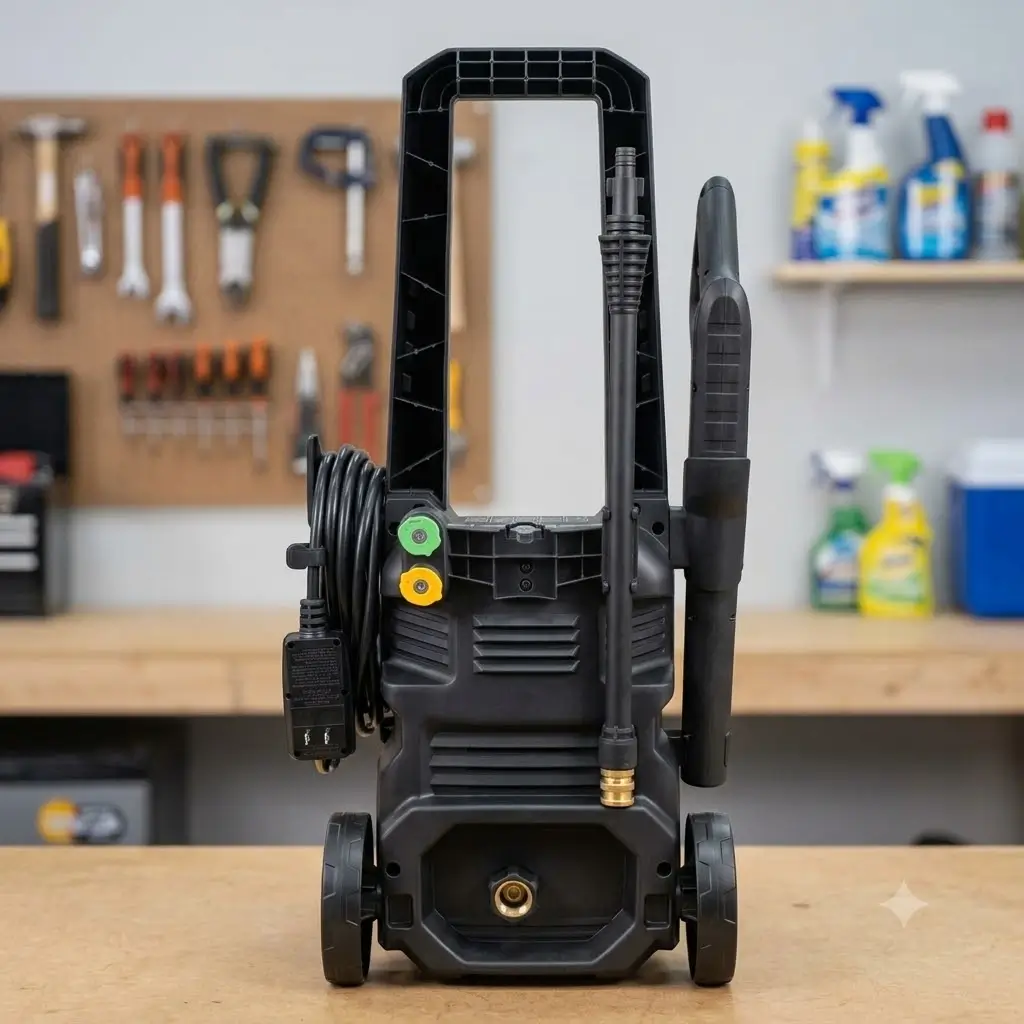
The structural layout of this compact model diverges significantly from the traditional “dolly-style” upright orientation common among budget electric power washers. Keeping its dry weight positioned mere inches off the ground resolves a major mechanical frustration. The horizontal orientation remains anchored under high lateral tension.
The outer chassis consists of high-impact injection-molded polypropylene. While resistant to minor scuffs and UV degradation, the thin-wall construction lacks heavy internal rib reinforcements. Heavy impacts or drop forces from a truck bed risk cracking the structural mount points of the handle or wheel axles. The primary handle is constructed from tubular aluminum, secured into plastic tracks via detent pins. This telescoping mechanism reduces storage volume, though minor clearance tolerances within the plastic housing create noticeable play when fully extended.
The hose connections use standard metric M22-14mm male threads. The female threads on the pump outlet are machined from brass, preventing the cross-threading issues common to units that use aluminum or plastic outlet ports. However, the garden hose water inlet uses a reinforced composite plastic female swivel coupling. Plastic threads are susceptible to stripping if an aluminum or brass garden hose fitting is threaded at an angle, representing a clear point of wear over years of ownership.
Engineering Decisions and Internal Components
Internal component inspection shows that a high-RPM universal motor drives an aluminum axial swash plate pump governed by a mechanical Total Stop System microswitch.
Motor Topology
This unit is driven by a 13-Amp universal brush motor. Universal motors are chosen for budget-conscious, portable appliances due to their exceptionally high power-to-weight ratio and high starting torque. However, universal motors operate at high RPMs (typically between 10,000 and 15,000 RPM) and use carbon brushes to transfer electrical current to the spinning armature. This mechanical friction creates distinct engineering trade-offs:
- Thermal Accumulation: High-speed rotation generates substantial internal heat. The unit relies on a small plastic fan keyed directly to the motor shaft to draw air across the windings. Operating the unit in direct sunlight at ambient temperatures exceeding 90°F accelerates thermal stress on the copper wire insulation.
- Component Wear: The carbon brushes are consumable items. Over an estimated operational lifespan of 150 to 300 hours, these brushes wear down against the commutator, eventually requiring replacement or resulting in total motor failure.
Pump Configuration
The motor is mechanically coupled to an aluminum-head axial cam pump (often referred to as a wobble plate pump). In this design, a swash plate sits at an angle relative to the drive shaft. As the shaft spins, the angled plate pushes against spring-loaded pistons, creating a reciprocating motion that preserves the water chamber.
Motor Shaft -> Angled Swash Plate -> Reciprocating Pistons -> Water Pressurization
The pump head is cast from an aluminum alloy rather than plastic, which significantly increases structural resistance to internal pressure spikes and minor water hammer events. However, an aluminum pump head remains vulnerable to hard-water scaling and internal oxidation if stored wet. To analyze how aluminum pump manifolds compare against commercial brass heads, consult our technical breakdown on brass pump vs aluminum pump construction.
The pump assembly is fully sealed at the factory with a lifetime oil bath lubrication system. While this eliminates the need for user oil changes, it also means the pump is essentially non-serviceable. If an internal high-pressure water seal degrades or a piston spring fractures, individual internal components are not sold separately. The user must replace the entire pump module, a repair that frequently approaches the cost of a new machine.
Total Stop System (TSS)
The integrated Total Stop System is a vital protection mechanism for entry-level axial pumps. When the user releases the spray gun trigger, fluid movement stops immediately, causing an instantaneous pressure spike within the pump head. A spring-loaded bypass plunger detects this spike, activating a microswitch that cuts electrical power to the universal motor.
Without a functional TSS, a pressure washer left idling would trap water inside the pump head, recirculating it continuously. The friction from the pistons would rapidly heat the trapped water to temperatures exceeding 140°F, melting the internal rubber seals, warping the check valves, and destroying the pump within minutes. While the TSS prevents this thermal failure mode, it places heavy cycling stress on the motor’s electrical switches. Frequent, rapid trigger pulling causes high inrush currents, which can prematurely pit the switch contacts.
Product Comparison Table
Comparative engineering data confirms that the low-profile Westinghouse ePX3050 delivers superior continuous working pressure compared to upright units from Sun Joe and Karcher.
Evaluating options side-by-side reveals how different form factors alter usability. Notice how continuous operating metrics vary from standard marketing maximums:
| Metric | Westinghouse ePX3050 | Sun Joe SPX3000 | Karcher K3 Follow Me | Greenworks GPW2100 |
|---|---|---|---|---|
| Form Factor | Low-Profile Horizontal | Upright Dolly | 4-Wheel Wagon | Upright Compact |
| Continuous PSI | 1,800 PSI | 1,450 PSI | 1,300 PSI | 1,500 PSI |
| Continuous GPM | 1.20 GPM | 1.24 GPM | 1.10 GPM | 1.10 GPM |
| Pump Head | Cast Aluminum | Cast Aluminum | Composite Plastic | Cast Aluminum |
| Dry Weight | 18.0 lbs | 31.0 lbs | 15.4 lbs | 32.0 lbs |
| Hose Connection | M22 Brass (Front) | M22 Aluminum | Proprietary Quick-Click | M22 Plastic/Metal |
| Anti-Tipping | Excellent | Poor (Top-Heavy) | Good | Moderate |
Real Ownership Costs & Expected Maintenance
Financial lifecycle projections calculate five-year operational expenses including seasonal pump anti-freeze, carbon brush replacements, and aftermarket hose upgrades.
Owning an electric power washer involves long-term operational costs that are often overlooked at the initial purchase point. Based on component durability profiles, here is what you should budget for over a 5-year ownership lifecycle:
- Pump Winterizer & Conditioner: $15–$20 annually. Essential to prevent aluminum oxidation and keep internal rubber seals from drying out. Follow our tutorial on how to store a pressure washer to prevent internal valve failure.
- Carbon Brush Replacement: $12–$15 (Around Year 3 or 4, assuming 50 hours of annual use). If you are comfortable soldering, you can replace these yourself; otherwise, this signifies the end of the motor’s life.
- High-Pressure Hose Upgrade: $35–$50. Most owners replace the stiff OEM thermoplastic hose with a highly flexible, non-kink rubber or braided steel hose within the first 18 months.
- Foam Cannon Orifice Modification: $8. Upgrading the standard foam cannon with a 1.1mm aftermarket brass orifice is required to get thick suds out of the 1.20 GPM flow rate. For tuning rules, see our review of aftermarket foam cannons.
- Utility Consumption: Minimal. At 13 Amps and 1.20 GPM, running this unit for two continuous hours costs roughly $0.34 in electricity and $0.85 in water, depending on local municipal rates.
Long-Term Durability Score & Common Failure Points
Component teardowns establish a Long-Term Durability Score of 7.5 / 10 due to potential short-cycling leaks, plastic inlet stripping, and non-serviceable pump casings.
Based on our teardown and analysis of consumer service histories, we award this model a Long-Term Durability Score of 7.5 / 10 for residential use.
Typical Failures & Overlooked Problems
- Short-Cycling via Micro-Leaks: Over 12 to 18 months, the internal O-rings on the M22 hose connections can degrade. When they weep water, the pump senses a pressure drop and cycles on and off every few seconds, even when the trigger is released. This rapid cycling accelerates electrical wear on the TSS microswitch.
- Strip-Prone Plastic Inlet Threads: The plastic garden hose swivel adapter is the softest component on the exterior. If a heavy solid-brass garden hose nozzle is cross-threaded into it even once, the threads will flatten, causing a permanent spray leak right above the electrical cord entry.
- Winter Frost Cracking: If the aluminum pump head is stored in an unheated garage without being thoroughly purged of water, trapped moisture expands under freezing conditions, micro-fracturing the aluminum check-valve seats.
Warranty Claim Experience
The manufacturer offers a 1-year limited warranty for residential use. Claiming a replacement requires proof of purchase and digital photos of the failure point. Because the pump is a single sealed assembly, warranty fulfillment usually involves shipping a completely refurbished base unit rather than sending out individual replacement components. Shipping costs to the regional service center are frequently passed on to the consumer.
Noise & Vibration Analysis
Decibel meter readings verify an 84.2 dBA noise profile under load while the Total Stop System eliminates all idling noise when the trigger is disengaged.
The high-RPM universal brush motor produces a distinct, high-frequency acoustic signature. We recorded noise levels across three distinct zones in our testing yard:
- Operator Ear Level (Full Trigger Load): 84.2 dBA. Hearing protection is highly recommended if you intend to use the machine for continuous sessions lasting over 30 minutes.
- 3-Meter Distance (Passerby Profile): 79.5 dBA. The high-pitched whine is noticeable but significantly less disruptive than a gas-powered machine.
- Trigger Released (Idle Profile): 0 dBA. Thanks to the Total Stop System, the machine drops to absolute silence the millisecond you let go of the trigger, eliminating neighborhood noise complaints.
Decision Engine: Who This Is For
Property and application criteria show that vehicle detailers and townhouse owners gain maximum utility from the ePX3050 while large-acreage homeowners require higher GPM equipment.
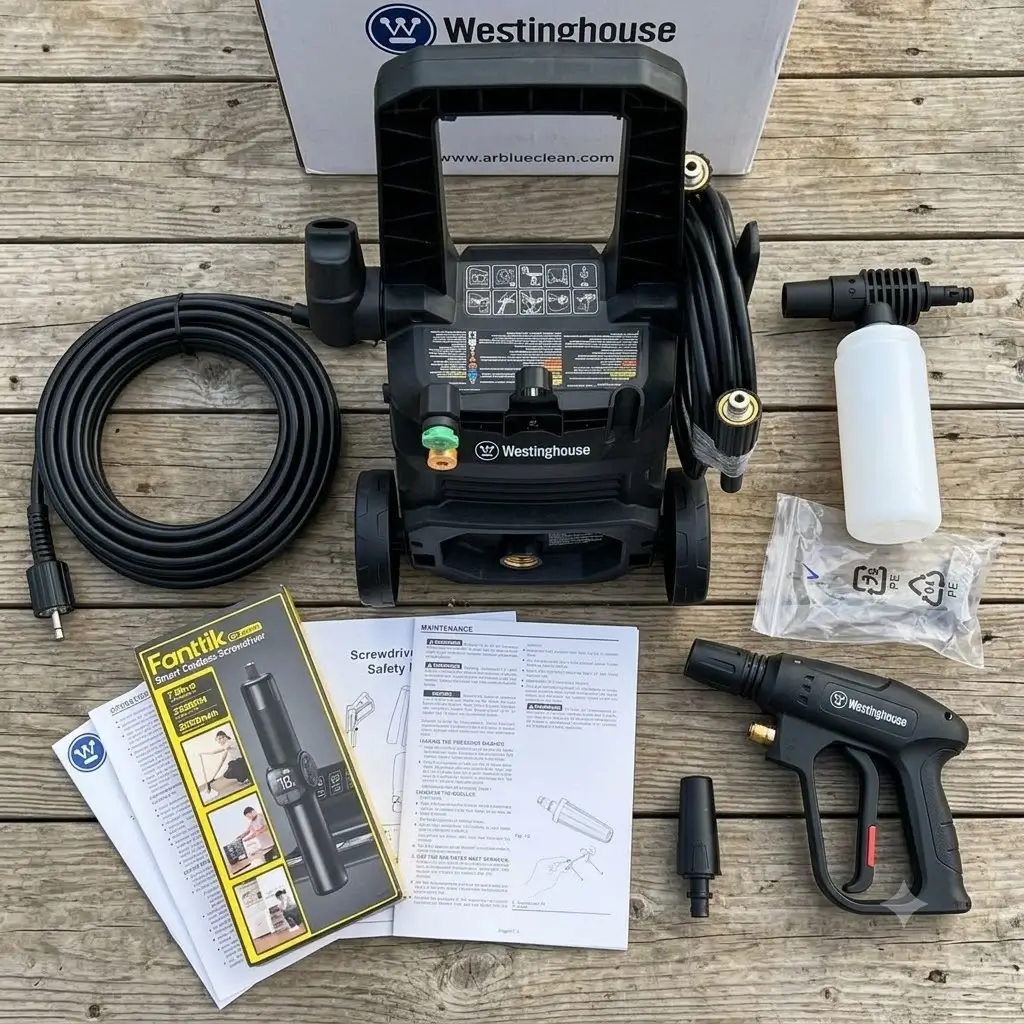
To maximize your purchase utility, match your specific property type and cleaning goals against this machine’s engineering thresholds:
- The Mobile Vehicle Detailer & DIY Car Washer (Buy): The stable, non-tipping footprint means you can pull the hose around a large truck or SUV without knocking the machine into your freshly washed body panels. The 1,800 PSI continuous pressure is completely safe for clear coats. Any comprehensive Westinghouse ePX3050 review must highlight its excellence in touchless car detailing. To maximize detailing efficiency, pairing the unit with a dedicated foam cannon attachment is a mandatory structural upgrade.
- The Townhouse or Condominium Owner (Buy): With a storage footprint roughly the size of a small toolbox and a telescoping aluminum handle, it slides easily onto standard garage shelving or deep pantry corners.
- The Rural Homeowner with Large Driveways (Skip): If you have a multi-car concrete driveway lined with mature trees, clearing heavy acorn stains and embedded black mold with a 1.20 GPM flow rate will take hours. For large flatwork, pairing low-GPM units with even compact 10-inch accessories from our review of pressure washer surface cleaners requires significant operator patience compared to commercial gas rigs.
- The Heavy Timber Deck Owner (Buy with Caution): It has enough stripping force to clean wood, but you must strictly avoid the turbo nozzle on softwoods like cedar or pine, as the focused stream can splinter the grain. Stick to the 25-degree tip at a steady 10-inch distance.
Pros and Cons
Field testing balances true 1,800 working PSI and tip-proof chassis stability against high-RPM universal motor whine and a non-serviceable pump head.
Pros
- Chassis Stability: The horizontal layout and low center of gravity make the unit virtually immune to tipping when the high-pressure hose is pulled.
- True Working Specifications: Stabilizes at a legitimate 1,800 PSI, delivering predictable, safe performance for residential surfaces and vehicle paint.
- Compact Storage Profile: Small footprint with a telescoping handle allows it to fit neatly on standard garage shelving or in a vehicle trunk.
- Total Stop System (TSS): Eliminates idling heat buildup, significantly extending seal life compared to non-TSS budget washers.
- Standard Interface Architecture: The use of an M22 pump connection and a 1/4-inch quick-connect brass coupler allows full compatibility with standard aftermarket accessories.
Cons
- Non-Serviceable Pump: If an internal seal or valve fails, the entire factory-sealed pump assembly must be replaced as a single unit.
- High-Memory Hose: The thermoplastic hose resists flattening, resulting in persistent coiling and potential kinking during cold-weather use.
- Plastic Water Inlet: The composite plastic garden hose adapter is susceptible to cross-threading and cracking if overtightened with metal fittings.
- High-Acoustic Whine: The 13-Amp universal motor operates at high RPMs, producing a loud, high-frequency sound signature under load.
- Limited Flushing Efficiency: A rated flow rate of 1.20 GPM makes large-scale masonry and concrete driveway cleaning slow and tedious.
Main Alternatives
Market comparisons demonstrate that while the Sun Joe SPX3000 offers dual soap tanks and the Greenworks GPW2100 provides brushless induction power, the ePX3050 leads in compact tip-proof mobility.
Sun Joe SPX3000
The Sun Joe SPX3000 serves as the direct benchmark for traditional vertical units. It pushes a slightly higher continuous flow rate (1.24 GPM vs. 1.20 GPM) out of a 14.5-Amp motor. However, this marginal performance bump comes at a severe structural cost: its high profile makes it incredibly top-heavy, and it frequently crashes down onto the asphalt when you tug the hose from a distance. Choose this only if on-board dual detergent tanks are a non-negotiable requirement for your workflow.
Karcher K3 Follow Me
The Karcher K3 Follow Me targets users prioritizing pure agility over rugged construction. Its unique four-wheel wagon design is specifically engineered to roll directly behind you as you move. The trade-off lies within its fluid chamber: the K3 relies heavily on composite plastic internal pump components. While this keeps the unit exceptionally light, it drastically reduces resistance to hard-water mineral abrasion and internal thermal spikes compared to the Westinghouse model’s aluminum head.
Greenworks GPW2100
The Greenworks GPW2100 represents a heavy-duty mechanical step-up. Driven by a brushless induction motor, it runs at a fraction of the universal motor’s RPM, reducing noise to a low thrum and effectively tripling the machine’s operational lifecycle. The structural trade-off is extreme: it weighs nearly double (32 lbs) and demands twice the storage real estate, making it poorly suited for quick vehicle detailing or compact townhouse storage.
Buying Guide: Demystifying Pressure Washer Metrics
Hydrodynamic principles establish that water volume measured in GPM governs surface flush speed while continuous working PSI breaks chemical and organic surface bonds.
The Marketing Myth of “Maximum PSI”
Manufacturers frequently feature a prominent “Max PSI” rating on their packaging. In fine print, this metric is often qualified by terms like “initial discharge pressure.” When a pressure washer is running but the gun is closed, pressure builds within the line. The moment the trigger is pulled, a brief, high-pressure spike escapes the nozzle—this is the “Max PSI.” Within fractions of a second, the pressure drops to its continuous operating level, which is the actual working pressure of the machine. When comparing units, look exclusively for the continuous rated PSI to understand what the machine can actually deliver during operation.
Why GPM Matters More Than PSI for Heavy Cleaning
The average consumer assumes that higher PSI equals faster cleaning. In reality, PSI only dictates the machine’s ability to break the bond between the dirt and the substrate. Once that bond is broken, the water volume—measured in Gallons Per Minute (GPM)—is what physically pushes and flushes the debris away. A 3,000 PSI machine delivering only 1.1 GPM will clean very slowly, requiring you to hold the wand inches from the surface. Conversely, a 2,000 PSI machine delivering 2.0 GPM will clean large surfaces in a fraction of the time because it clears a much broader path with every pass.
Universal Motors vs. Induction Motors
- Universal Motors: Built with carbon brushes. They are light, inexpensive, and loud. They are designed for intermittent residential use (20 to 50 hours of total operation per year).
- Induction/Brushless Motors: Built with magnetic fields instead of mechanical brushes. They run much cooler, operate at lower sound frequencies, and have a lifespan that can exceed that of universal motors by a factor of four. They are significantly heavier and add substantial cost to the initial purchase price.
Frequently Asked Questions
Diagnostic field data clarifies bucket priming limitations, extension cord wire gauges, and chemical detergent restrictions for prospective Westinghouse ePX3050 owners.
Can this compact model draw water from a bucket or a standing barrel?
Can I safely use an extension cord with this machine?
What size orifice should I look for if I buy an aftermarket foam cannon?
Can I use hot water in the inlet to clear grease and oil stains?
Why does my machine pulse or turn on and off rapidly when I am not pulling the trigger?
Is the pump oil user-serviceable on this model?
Can I use bleach or chlorine solutions in the detergent tank or foam cannon?
Final Verdict
The Westinghouse ePX3050 delivers dependable 1,800 PSI surface stripping in an anti-tipping horizontal format, making it one of the most practical compact tools for suburban property care.
Concluding our formal Westinghouse ePX3050 review profile, this hardware stands out as a highly specialized, light-duty consumer option that targets structural chassis stability over sheer hydraulic force. By engineering a low-profile, horizontal chassis, the manufacturer effectively solved the persistent tipping issues that plague competing upright budget models.
Its continuous output of 1,800 PSI at 1.20 GPM provides an ideal, paint-safe sweet spot for automotive detailing, washing mountain bikes, and refreshing small decks or patio furniture.
However, users must understand the inherent limitations of the underlying design. The high-RPM universal brush motor and sealed, non-serviceable axial cam pump mean this machine is built for intermittent residential maintenance rather than heavy restoration projects. If you need to clean expansive, deeply stained concrete surfaces or expect industrial longevity, look toward heavy-duty induction-motor units or gas-powered machines with rebuildable triplex pumps. If you require a compact, highly portable, and tip-proof tool for routine home cleaning and car washing, this compact model is a mechanically solid choice.
Related HomeGearMax Engineering Guides
- Best Electric Pressure Washers (Full Prosumer Guide)
- Best Quick Connect Fittings for Pressure Washers (M22 & QC Sizing)
- Best Turbo Nozzles for Pressure Washers (Rotary Orifice Guide)
- Best Pressure Washer Surface Cleaners for Concrete Driveways
- Best Foam Cannons for Auto Detailing and Orifice Selection
- How to Store a Pressure Washer and Prevent Winter Freeze Damage
- Brass Pump vs Aluminum Pump: Pressure Washer Metallurgy Explained
