
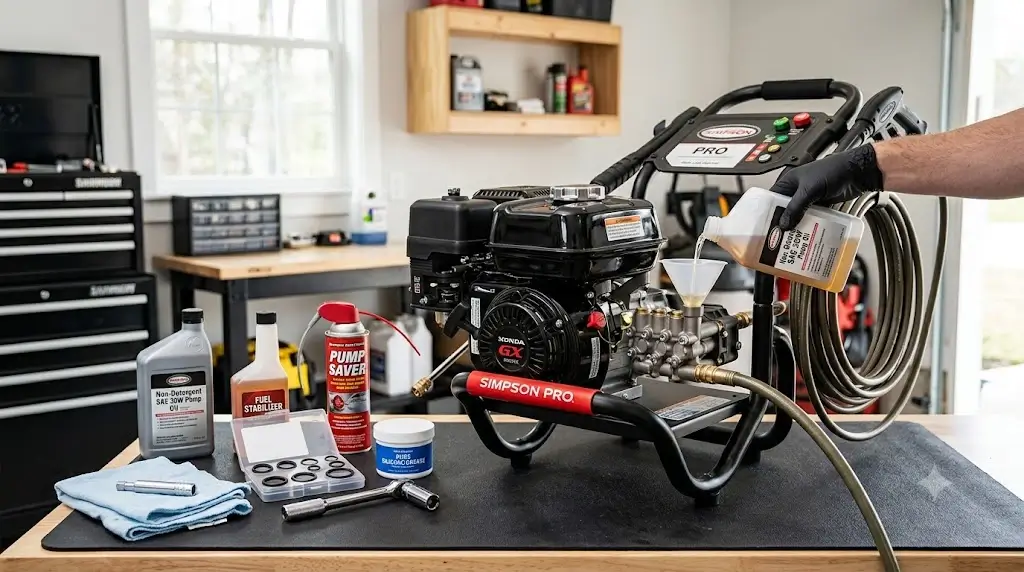
Essential Pressure Washer Maintenance Guide
Most pressure washers don’t fail because the pump wears out from mechanical exhaustion. They fail because water is left inside over winter, pump oil isn’t changed on serviceable units, or clogged nozzles force the pump to run under extreme back-pressure. The high-pressure hydraulic environment inside a pump (often reaching 2,000 to 4,000 PSI) leaves very little room for maintenance errors. Unevacuated water in brass or aluminum manifolds causes internal corrosion and freeze-cracking, while degraded oil leads to rapid seal failure and bearing destruction.
Engineering Inspection & Teardown Notes
Our maintenance protocols are based on teardowns and long-term testing across multiple pressure washer platforms, including Honda GX series gas engines, CAT Pumps, AR Annovi Reverberi triplex units, and residential axial cam electric washers (Ryobi, Simpson, Sun Joe). Pressure readings were verified using inline liquid-filled pressure gauges (0–5000 PSI range).
Quick Technical Verdict
- Overall Maintenance Difficulty: Moderate (Requires basic hand tools and correct fluid specs)
- Critical Priority: Pump winterization and non-detergent oil replacement (Triplex pumps only).
- Primary Failure Points: Ethanol-gunked carburetors, frozen axial pump manifolds, and torn hose O-rings.
- Bottom Line: Never leave untreated water inside the pump. Use fuel stabilizer on gas engines (Honda GX, Briggs & Stratton, Kohler) and always inject Pump Saver liquid prior to seasonal storage.
Comprehensive Pressure Washer Maintenance Schedule
Adhering to a standardized maintenance timeline prevents unexpected operational downtime during heavy cleaning projects.
| Interval | Gas Models | Electric Models | Pump Maintenance |
|---|---|---|---|
| Before Every Use | Check engine oil, fuel level, air filter, and water inlet screen. | Check GFCI plug, power cord, and water inlet filter screen. | Inspect high-pressure O-rings, spray nozzle orifice, and hose connections. |
| Every 25–50 Hours | Change engine oil (after first 5h break-in), clean foam air filter element. | Clean motor cooling fins and plastic housing ventilation ports. | Change Triplex pump oil (after first 50h break-in). Inspect thermal relief valve. |
| Every 100 Hours / Annual | Replace spark plug, change paper air filter, replace fuel filter. | Inspect main electrical wiring harness and switch contact seals. | Change Triplex pump oil (every 300h or yearly). Lubricate unloader valve seals. |
| End of Season / Winter | Add fuel stabilizer, run dry or drain tank & carburetor bowl. | Purge all internal standing water from housing. | Inject Pump Saver / Antifreeze lubricant into pump inlet port. |
Required Tools & Maintenance Supplies
Using improper fluids—such as detergent automotive oil inside a pressure pump—will degrade rubber V-packings and accelerate internal wear. Stock the following manufacturer-approved supplies:
- Pump Lubricant: SAE 30W Non-Detergent Pump Oil or AW-46 Hydraulic Oil (for Triplex pumps like Cat Pumps, AR Annovi Reverberi, Comet, or General Pump).
- Engine Oil: SAE 30 (for temperatures above 40°F) or 10W-30 synthetic oil (Honda GX, Kohler, Briggs & Stratton engines).
- Pump Preservative: Specialized Aerosol Pump Saver / Antifreeze containing liquid silicone & anti-corrosants.
- Fuel Treatment: Premium ethanol fuel stabilizer (e.g., Sta-Bil Storage).
- O-Ring Maintenance: Multi-size NBR rubber O-ring kit, white lithium grease, or 100% pure silicone dielectric grease.
- Hand Tools: Spark plug socket, nozzle cleaning tip needle, oil drain pan, and adjustable wrenches.
Pump Lifespan & Design Comparison
Pump design dictates repairability, continuous duty cycles, and overall operating hours before component replacement becomes necessary.
| Pump Type | Average Lifespan | Oil Servicing | Repairability | Typical Application |
|---|---|---|---|---|
| Wobble Plate | 60 – 120 Hours | Sealed (None) | Non-serviceable | Entry-level electric residential washers |
| Axial Cam | 150 – 300 Hours | Sealed (None) | Limited (Pump replacement common) | Mid-range electric & residential gas washers |
| Triplex Plunger | 2,000 – 5,000+ Hours | Replaceable (Every 300h) | Fully rebuildable (Valves, seals, plungers) | Commercial gas & prosumer pressure washers |
The Engineering Behind Pressure Washer Maintenance
To properly service a pressure washer, you must distinguish between the mechanical driver (engine or motor) and the positive displacement hydraulic pump.
The high-pressure pump operates under extreme friction. It uses reciprocal plungers sliding through rubber V-packing seals, check valves with stainless steel balls, and tight brass valve caps. Tiny particles of sand, air cavitation from kinked supply hoses, or thermal stagnation can cause seal extrusion and cylinder scoring within seconds.
Seal Failure & Cavitation Progression
1. High-Pressure Seal Failure Sequence
2. Water Inlet Cavitation Sequence
High-Pressure Pump Maintenance Protocols
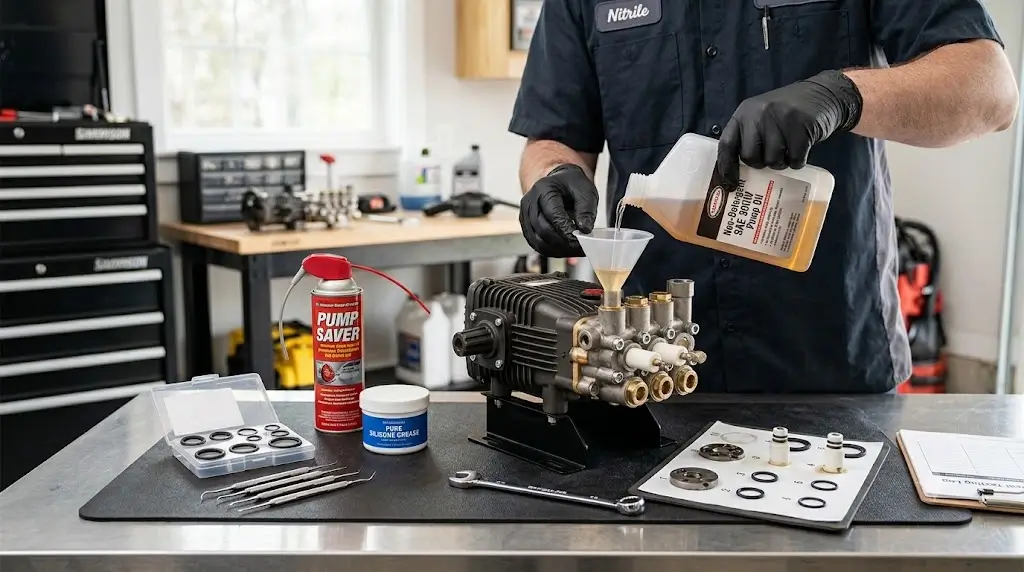
Axial Cam vs. Triplex Plunger Pumps
Axial Cam Pumps: Installed on standard residential units—including many of the best electric pressure washers on the market (e.g., Ryobi, Craftsman, Sun Joe, Simpson Residential). These pumps use a wobble plate to drive pistons in an axial orientation. They are factory-sealed with lifetime oil and non-serviceable internal gearboxes. Expected lifespan is 100 to 300 operational hours. Maintenance is strictly restricted to external water flushing, nozzle clearing, and antifreeze protection.
Triplex Plunger Pumps: Installed on commercial and heavy-duty prosumer machines (e.g., Simpson Pro, Pressure Pro, DeWalt Commercial). Featuring a forged crankshaft driving solid ceramic plungers through an open oil bath crankcase. Triplex pumps feature user-replaceable check valves, water seals, and oil sight glasses, easily surpassing 3,000+ operational hours when serviced properly.
Triplex Pump Oil Replacement Procedure
- Run the machine for 3 minutes to warm the pump crankcase oil slightly.
- Place a catch pan under the pump drain plug located beneath the crankcase housing.
- Remove the top dipstick/breather cap, then remove the lower hex drain plug.
- Allow fluid to drain completely (inspect for milky color, which indicates water seal failure).
- Reinstall the drain plug. Fill with non-detergent oil until fluid reaches the red dot on the glass sight window.
Unloader & Thermal Relief Valve Maintenance
The Unloader Valve recirculates water into bypass mode when the spray gun trigger is released. Annually remove the unloader, inspect its internal stainless steel piston and rubber O-rings, and apply a thin layer of waterproof silicone grease to prevent sticking.
The Thermal Relief Valve dumps hot water (at ~140°F / 60°C) if the pump remains in bypass mode too long without trigger pull. Inspect the valve’s port for calcium deposits annually and replace if continuous dripping occurs during active operation.
Power Plant Care: Gas Engines vs. Electric Motors
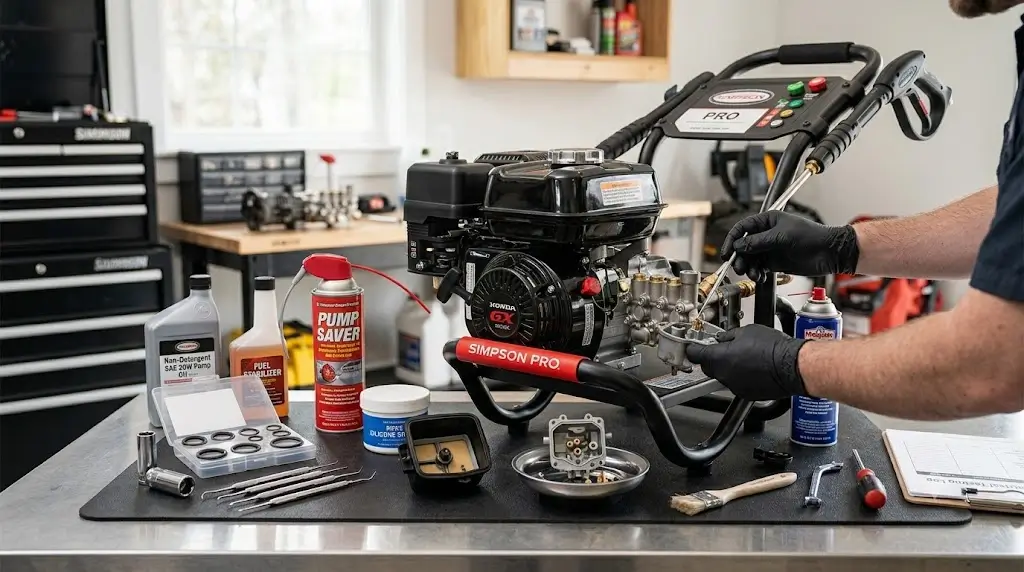
Gasoline Engine Maintenance
Small gas engines (Honda GX200/GX390, Kohler SH265, Briggs & Stratton CR950) face tough dust and load demands.
- Engine Oil: Change every 50 operating hours. Check level before every pull start.
- Air Filter: Clean foam pre-cleaners every 25 hours. Replace paper cartridge filters annually. Never blow out paper air filters with high-pressure air, as it micro-tears the paper matrix.
- Carburetor Care & Stale Fuel: Gasoline containing E10/E15 ethanol absorbs atmospheric water, creating phase separation that deposits varnish inside small brass carburetor jets. Always treat fresh fuel with stabilizer and run the engine until fuel lines are drained prior to long storage.
Electric Motor Maintenance
- Heat Dissipation: Ensure the aluminum heat-sink fins surrounding the motor housing are free of mud and debris.
- Electrical Safety: Test the Ground Fault Circuit Interrupter (GFCI) built into the power cord prior to every use. Never operate electric pressure washers on thin, ungrounded 16-gauge extension cords; use minimum 12-gauge cords under 25 feet to prevent voltage drop and winding burnout.
Winterization & Storage Mistakes
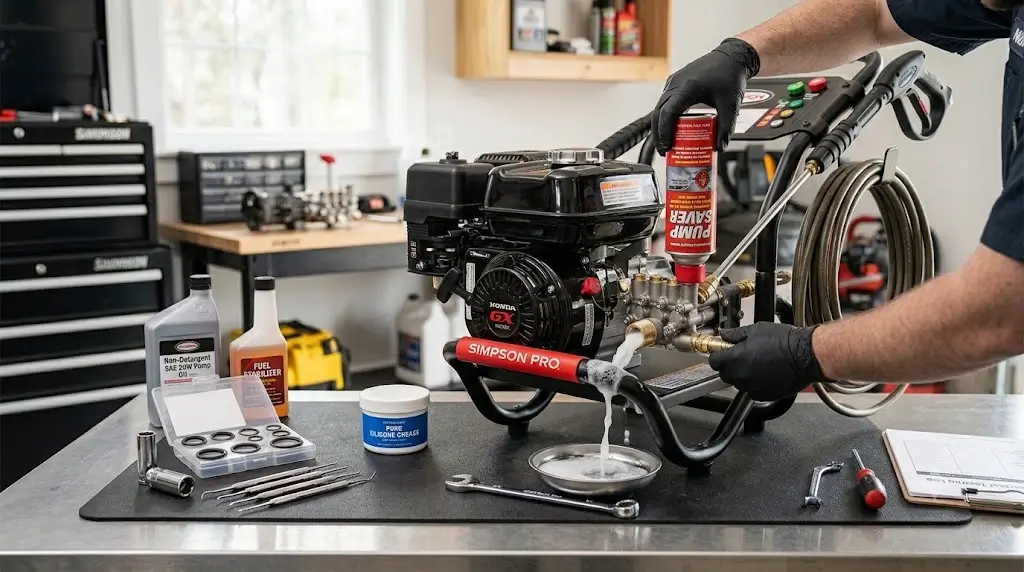
Top 5 Storage Mistakes to Avoid
- Leaving Trapped Pressure in the Hose: Failing to squeeze the trigger after turning off the unit leaves 2000+ PSI trapped against the unloader valve seals.
- Storing in High-Humidity Sheds without Pump Saver: High humidity causes surface oxidation on internal steel plunger springs, causing valve sticking in spring.
- Forgetting Detergent Lines: Leaving soap solution in the chemical injector tube corrodes internal check-valve springs.
- Leaving Spray Nozzles Attached: Mineral deposits seal quick-connect collars shut over winter. Store nozzles in a dry pouch.
- Kinking High-Pressure Hoses during Roll-Up: Storing hose with tight bends cracks internal steel wire braiding.
The Pump Saver Protocol
- Turn off engine or disconnect electrical supply. Disconnect garden supply hose and high-pressure spray gun hose.
- Screw a bottle of aerosol Pump Saver / Antifreeze directly onto the pump’s 3/4″ garden hose inlet thread.
- Depress the valve stem on the aerosol can while slowly pulling the engine starter recoil (or jogging the electric switch for 1 second) until foam exits the high-pressure brass outlet port.
- Disconnect the can. Internal seals, valves, and pistons are now coated in a non-freezing protective fluid.
Component Replacement Cost Table
Below is an overview of standard replacement parts and typical maintenance costs for consumer and prosumer pressure washers.
| Maintenance Part / Component | Estimated Part Cost (USD) | Replacement Frequency |
|---|---|---|
| High-Pressure O-Ring Kit | $5 – $12 | As needed (1–2 seasons) |
| Pump Saver Aerosol (16 oz) | $10 – $15 | Every winter storage cycle |
| Non-Detergent Pump Oil (32 oz) | $9 – $14 | Every 300 hours or annually |
| Unloader Valve Assembly | $25 – $55 | 2 – 4 years (or when sticking) |
| Thermal Relief Valve | $12 – $22 | Upon failure (continuous leak) |
| Triplex Pump Water Seal Rebuild Kit | $45 – $85 | When oil turns milky |
| Replacement Residential Axial Pump | $70 – $140 | Upon catastrophic manifold failure |
Troubleshooting & Diagnostic Matrix
| Symptom | Probable Mechanical Cause | Corrective Action |
|---|---|---|
| Pressure Pulses / Surges | Restricted water inlet flow; clogged inlet screen; air trapped in pump; blocked nozzle tip. | Clean inlet screen filter; clear nozzle orifice with needle; purge air by squeezing spray gun with motor off. |
| Low Spray Pressure | Worn spray tip orifice; stuck unloader bypass valve; worn pump packings or check valves. | Replace quick-connect nozzle tip; service and grease unloader valve; rebuild pump check valves. |
| Milky Pump Oil Window | Water bypassing worn ceramic piston packings and entering the oil crankcase. | Immediately stop operation. Disassemble pump head and install new low-pressure & high-pressure seal kits. |
| Engine Starts Then Dies | Stale ethanol gas varnish in carburetor bowl; clogged fuel jet; low engine oil sensor trip. | Clean carburetor bowl and main jet with solvent; top off engine oil to full mark on dipstick. |
Frequently Asked Questions
How often should I change the oil in my pressure washer pump?
For Triplex plunger pumps, replace oil after the first 50 hours of initial break-in, and every 300 operating hours (or annually) thereafter. Axial cam pumps are factory-sealed and do not require oil changes.
What kind of oil does a pressure washer engine use versus the pump?
Gas engines typically use SAE 30 or 10W-30 detergent engine oil (Honda/Briggs spec). Pumps require non-detergent SAE 30W pump oil or AW-46 hydraulic fluid. Never cross-use these oils.
Can I use RV antifreeze in a pressure washer?
While RV antifreeze prevents freezing, specialized aerosol Pump Saver is preferred because it contains light silicone lubricants that keep internal rubber V-packings and O-rings soft during long storage periods.
Why does my pressure washer lose pressure after warming up?
Loss of pressure after 10–15 minutes of operation usually indicates a sticking unloader valve, thermal bypass or thermal expansion of worn high-pressure packings allowing water to recycle internally.
Can I run a pressure washer without water connected?
Never. Running a pressure washer pump dry without supply water for even 15 to 30 seconds creates friction heat that permanently burns internal rubber packings and ceramic pistons.
Technical Documentation References
- CAT Pumps Service Manual: Plunger Pump Preventive Maintenance & Seal Replacement Standards (Triplex Series).
- AR Blue Clean / Annovi Reverberi: Technical Service Bulletin for Axial and Triplex High-Pressure Pumps.
- Honda Engines Owner’s Manual: GX160 / GX200 / GX390 Small Engine Maintenance Schedules & Fuel Storage Guidelines.
- Briggs & Stratton Engine Care: Ethanol Fuel Preservation and Carburetor Service Guidelines.
Final Verdict
Systematic pressure washer maintenance is the difference between a machine that breaks after a single winter and one that delivers reliable high-pressure power for decades. For homeowners using electric axial units, maintenance focuses on clean water filtration, O-ring greasing, and winterizing with Pump Saver fluid. For commercial operators running gas Triplex machines (Honda GX/Cat Pump combinations), strict engine oil changes, non-detergent pump oil maintenance, and ethanol fuel management are paramount. Protect your hydraulic investment before every storage cycle to ensure instant starting and maximum PSI output next spring.
